Last updated November 18, 2026






Free written scope consultation - allowances, timeline, and change-order rules on paper before a single trade is scheduled
How Long Does Bathroom Remodeling Take? Timelines and What to Expect
A contractor who says “two weeks” is usually right about the installation. They’re not telling you about the three-week lead time on your tile, the permit window, or the inspector availability that shoves the whole schedule sideways. Most Richardson bathroom remodels run six to ten weeks from contract to final walkthrough, and the gap between the quote you heard and the calendar you’ll live with is almost always the stuff nobody writes down. This guide maps the full timeline, phase by phase, including the delays that catch homeowners off guard, and how to protect yourself when a project slips past its promised completion date.
Quick Answer
A standard full bathroom remodel in Richardson takes six to ten weeks of total project time, not two. A cosmetic refresh (new fixtures, paint, vanity) can finish in two to three weeks, while a full gut with a layout change commonly runs ten to fourteen weeks. Of that time, only about half is actual construction; the rest is design, permitting, material lead times, and inspection scheduling.
Styles & brands we work with
- Kitchen remodeling
- Bathroom remodeling
- Home additions & ADU
- Roofing
- Windows & doors
- Driveway & pavers
- Fence
Table of Contents
- Why Bathroom Remodel Timelines Are Almost Always Understated
- The Full Bathroom Remodel Calendar, Phase by Phase
- How Scope Changes Everything: Cosmetic vs. Full Gut vs. Layout Change
- What Richardson, TX Permit Timelines Actually Look Like
- The Top 5 Delay Causes (and Which Ones Are Contractor-Controllable)
- How to Protect Yourself Contractually on Completion Dates
- Setting Realistic Expectations for Living Through a Remodel
Why Bathroom Remodel Timelines Are Almost Always Understated
Here’s the disconnect. When a contractor quotes a bathroom, they’re often quoting labor hours on the tools: demo, plumbing rough-in, tile setting, trim, fixtures. That number is real, and it’s usually accurate. What it leaves out is everything that happens when nobody’s swinging a hammer. Tile that ships from a supplier in three weeks. A permit that sits in review for ten business days. An inspector who can’t get to your rough-in until Thursday of next week.
In our experience across Richardson, the installation itself is rarely the problem. The calendar is. A typical bathroom has somewhere between 60% and 70% of its total duration spent waiting, prepping, or coordinating, and only the remaining fraction spent in active construction. When a homeowner hears “two weeks,” they’re hearing the construction slice and picturing the whole pie.
This matters because Richardson homeowners make real decisions around those dates: taking time off work, booking a hotel, scheduling a family visit around a downed bathroom. When the timeline is understated, the frustration isn’t about the workmanship. It’s about the surprise. Our position is simple: quote the whole calendar, not the satisfying part.
There’s a second reason timelines slip, and it’s less about math than momentum. Bathrooms are small rooms with a lot of trades packed into them. Plumbing, electrical, tile, drywall, waterproofing, glass, cabinetry, and finish carpentry all pass through one doorway in sequence. Any single trade that’s a day late pushes every trade behind it. A kitchen can absorb that; a bathroom can’t, because there’s nowhere else to work.
The Full Bathroom Remodel Calendar, Phase by Phase
Here’s what a realistic full bathroom remodel calendar looks like in Richardson. The ranges below assume a mid-size hall or primary bath, a full gut with no major layout change, and standard material selections. Your exact numbers will shift, but the sequence won’t.
- Design and selections: 1 to 3 weeks. This is where the project is really decided. Fixture choices, tile, vanity, lighting, and layout all get locked here. Every day you delay a tile selection is a day added to lead time later.
- Permitting: 1 to 3 weeks. Cosmetic work often needs no permit. Anything touching plumbing relocation, electrical, or structural work does. Richardson’s review window varies with workload and completeness of the submittal.
- Material lead times: 1 to 4 weeks (overlaps with permitting). Stock tile and fixtures arrive fast. Special-order tile, custom vanities, and glass shower enclosures can run three to four weeks or more. Ordering early is the single biggest lever you control.
- Demo: 1 to 2 days. Faster than most homeowners expect. This is the satisfying part.
- Rough-in (plumbing and electrical): 3 to 5 days. New supply and drain lines, valve work, and electrical for lighting and outlets. This phase requires an inspection before it can be closed up.
- Rough-in inspection: 1 to 5 business days. Depends entirely on inspector availability. This is a common hidden delay.
- Insulation, drywall, and waterproofing: 4 to 7 days. Includes drywall hang, taping, and a proper waterproofing membrane over the wet areas.
- Tile setting and grouting: 4 to 8 days. Floor tile, shower walls, and any accent work. Curing time is real and can’t be rushed.
- Finish work: 5 to 10 days. Vanity install, toilet set, lighting, trim, paint, and shower glass.
- Punch list and final inspection: 2 to 5 days. The small stuff that separates a finished job from a done-right job.
Add those up and you’re somewhere in the six-to-ten-week range for a mid-size gut, with the exact number driven mostly by lead times and inspection scheduling. Cosmetic jobs skip several of these phases entirely; layout changes add to them.
How Scope Changes Everything: Cosmetic vs. Full Gut vs. Layout Change
Scope is the single biggest driver of timeline. Two bathrooms on the same street in Richardson can take three weeks and fourteen weeks respectively, and neither contractor is lying. The difference is what’s behind the wall.
Cosmetic refresh: 2 to 3 weeks
New paint, vanity, mirror, lighting, faucet, and a re-grout or overlay on existing tile. No plumbing moved, no electrical added, no permit needed in most cases. The main risk is discovering that the existing plumbing or subfloor isn’t in the condition the plan assumed once things come apart.
Full gut with same layout: 6 to 10 weeks
Everything comes out down to the studs, then gets rebuilt. New tile, new fixtures, new waterproofing, new vanity, often new plumbing trim and electrical. This is the most common full bathroom remodel in Richardson and the range most homeowners should plan around.
Layout change: 10 to 14 weeks
Moving the toilet, sink, or shower means relocating drain and supply lines, which usually means opening floors and sometimes walls. It always triggers a permit and inspection. It also means coordination with the trade sequence is tighter, which adds days. The upside is a genuinely better bathroom. The cost is calendar.
One more variable: size. A 5×8 hall bath and a 10×12 primary bath aren’t on the same clock even with identical scope. Tile square footage, fixture count, and lighting plan all scale up, and so do the days.
What Richardson, TX Permit Timelines Actually Look Like
This is where the city website and the jobsite tell different stories. Published review windows represent the target, not the guarantee. In practice, three things affect your actual permit timeline in Richardson:
- Submittal completeness. A clean package with correct drawings and a clear scope moves fast. A package that gets kicked back for revision restarts the clock.
- Workload cycles. Permit volume ebbs and flows with the season. Spring and early summer tend to be busier across North Texas, and review times stretch accordingly.
- Inspection scheduling. The rough-in inspection is the critical handoff before walls close. When inspector availability is tight, that single visit can add several days to the calendar.
What counts as permit-required work in Richardson: anything that relocates plumbing or adds electrical circuits, and any structural change. A pure cosmetic refresh typically doesn’t require a permit. If a contractor tells you permits aren’t needed for a full gut with moved plumbing, that’s a red flag worth taking seriously.
One detail that saves days: getting the permit application in while materials are still on order, rather than after. Permitting and lead time run in parallel, not in sequence, if the project is scheduled well. That single scheduling choice can shave a week or two off the total calendar. We pull permits and pass inspections as a standard part of the job, so that clock runs on our side of the table, not yours.
The Top 5 Delay Causes (and Which Ones Are Contractor-Controllable)
Not all delays are created equal. Some you can fire a contractor over. Others are weather, supply chain, or a city inspector’s calendar, and nobody can do much about them. Knowing which is which is how homeowners avoid getting angry at the wrong thing, or letting the wrong thing slide.
- Material lead times (external, partly controllable). Special-order tile, custom vanities, and glass enclosures often run three weeks or more. A good contractor orders on day one and tells you the date up front. A contractor who waits until demo is done has created a delay that was theirs to prevent.
- Permit and inspection scheduling (mostly external). The city controls this clock. A contractor can only keep the submittal complete and the site ready when the inspector arrives. If the site isn’t ready, that delay becomes theirs.
- Change orders mid-project (homeowner-driven). The most common, most expensive delay. A fixture swap or tile change after work begins means reordering, rescheduling, and re-sequencing. Decide before demo, not during.
- Hidden conditions behind the wall (external). Rotted subfloor, corroded supply lines, old galvanized plumbing, or a drain that’s not where the drawing said. These are discovered, not caused. What separates contractors is whether they flag it immediately with a price and a revised schedule, or let it sit.
- Trade sequencing and crew availability (contractor-controlled). If the plumber shows up a day late, the tile setter is standing around, and the drywall crew gets pushed to next week, that’s a scheduling failure. This is the delay most worth firing a contractor over.
In our experience, the single biggest cause of blown timelines in Richardson isn’t any of these individually. It’s a contractor who booked too many jobs for the season and is stretched thin across all of them. Crews arrive late, sequencing slips, and no one is accountable because no one is on site.
How to Protect Yourself Contractually on Completion Dates
Every remodel contract should name a substantial completion date, and that date should be realistic. If a contractor promises four weeks on a full gut with a layout change, the promise is the problem, not the calendar. Once the date is set, here’s what actually protects you when a project slips.
- Written substantial completion date. Not “approximately.” A specific date, in the contract, with the scope it applies to. Substantial completion means usable, not 100% done; the punch list follows.
- A defined delay clause. Well-written contracts specify what counts as excusable delay (weather, permit delays, supply issues, hidden conditions) and what doesn’t (crew scheduling, ordering mistakes). Both should be in writing.
- Milestone-linked payment schedule. Payments should follow progress, not the calendar. Small deposit, then payments tied to completed phases (demo, rough-in, tile, finish). Never pay the bulk upfront.
- A workmanship warranty in writing. The warranty should be specific, contain an actual term, and cover labor and materials, not just materials. Our 730-Day Done Right Promise is one of the longest workmanship guarantees in residential construction; if something isn’t right, we make it right.
- Change-order process in writing. Any scope change should get a written price and a schedule impact before work continues. Verbal change orders are what turn a two-week slip into a two-month one.
- Lien waivers from subcontractors. Protects you from paying twice if a subcontractor wasn’t paid by the contractor.
Read the completion clause before you sign, not after. Any contractor who resists putting a date in writing is telling you something.
Setting Realistic Expectations for Living Through a Remodel
Timeline math is only half the story. The other half is the lived experience, and it’s worth planning for the same way you plan for the materials.
You’ll be without a working bathroom for most of the construction. For a primary bath, that means a shared hall bath, a gym membership, or a temporary shower setup. Budget for it. A six-to-ten-week project means six to ten weeks of inconvenience, and counting on a shorter window than the one you were quoted is how homeowners end up blindsided.
Contractor access matters too. Crews will be walking through the house daily, tracking dust through doorways and into hallways. Protect floors on the path, and don’t expect the room to look tidy while the tile cures. The dust settles down after the drywall phase, which is usually the messiest stretch.
And throughout, expect to be asked to make small decisions: which side the towel bar goes, where the shower niche lands, what happens when a fixture arrives slightly different than the sample. These micro-decisions are where remodels stretch, so making them quickly keeps the calendar on track.
If you’re planning a larger project that includes a bathroom plus other work, see our notes on Home Additions & ADU in Richardson, which have their own multi-month calendars and their own permit cycles.
Common Mistakes to Avoid
- Booking a hotel for the quoted duration. Seven nights of hotel for a six-to-ten-week project is a common and expensive mistake. Plan for the top of the range, and be happy if it comes in early.
- Choosing tile after demo starts. This single decision adds a three-week or longer lead time after the crew is already on-site. Pick tile, vanity, and fixtures before the contract is signed.
- Changing fixtures mid-project. Every mid-project change resets sequencing. A swapped vanity means new dimensions, a new cut plan, and a new delivery date.
- Paying too much upfront. A large deposit with no milestone schedule removes the contractor’s incentive to finish. Pay against progress, not promises.
- Skipping the permit to save time. An unpermitted full gut becomes a disclosure problem at resale and a liability problem during inspection. In Richardson, permit records come back to bite on the sale, not the build.
- Assuming the lowest bid is the fastest. The fastest quote is usually the one with the most missing scope, and the missing scope shows up as change orders once the walls are open.
- Going without a written completion date. If the contract doesn’t name a date, the project doesn’t have one. A “roughly two weeks” handshake is not a schedule.
See the difference
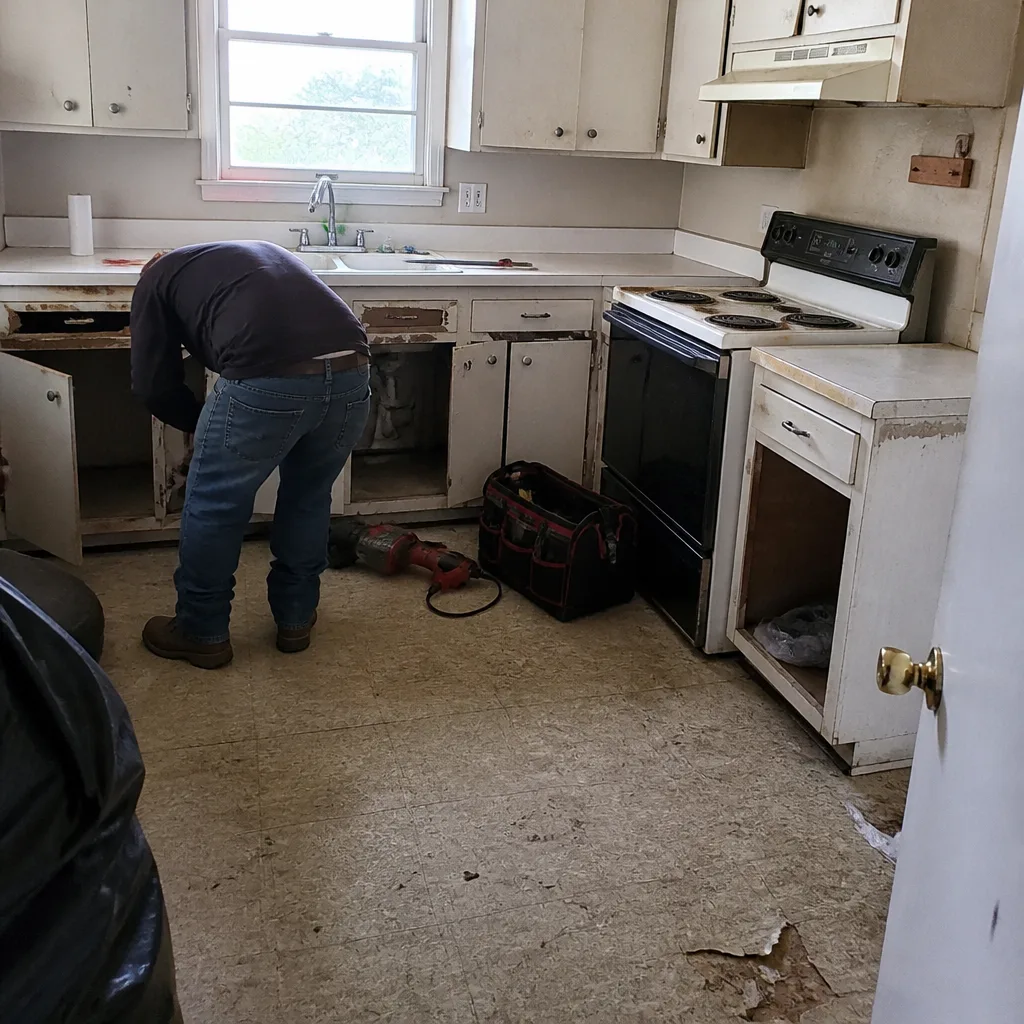 Before
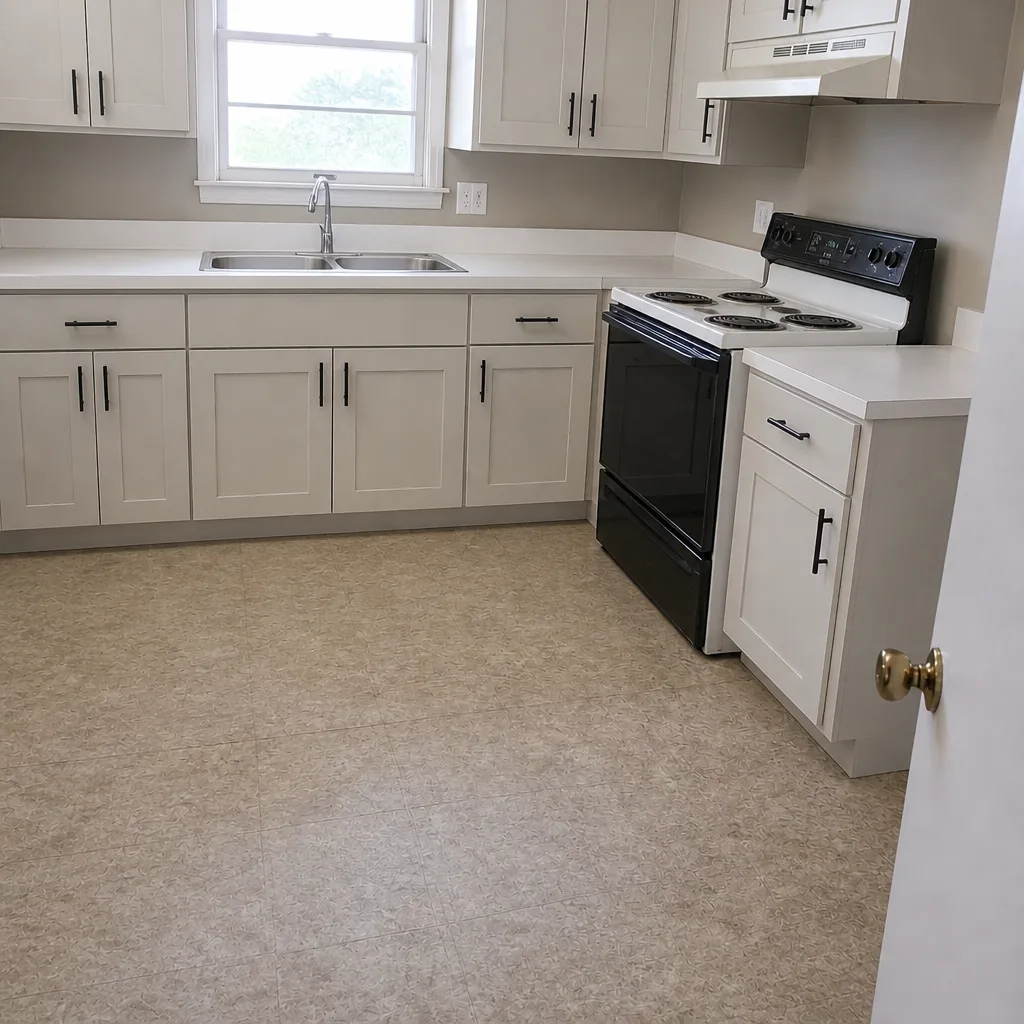 After
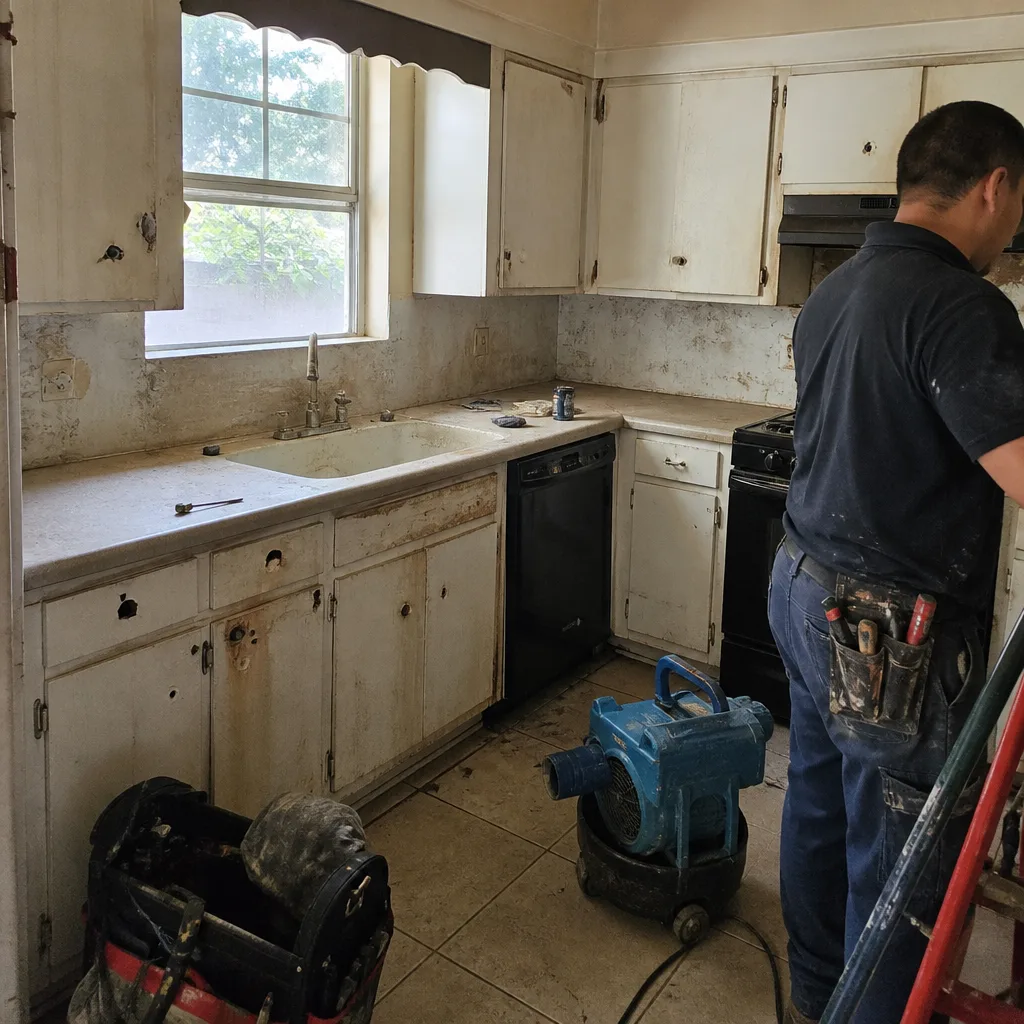 Before
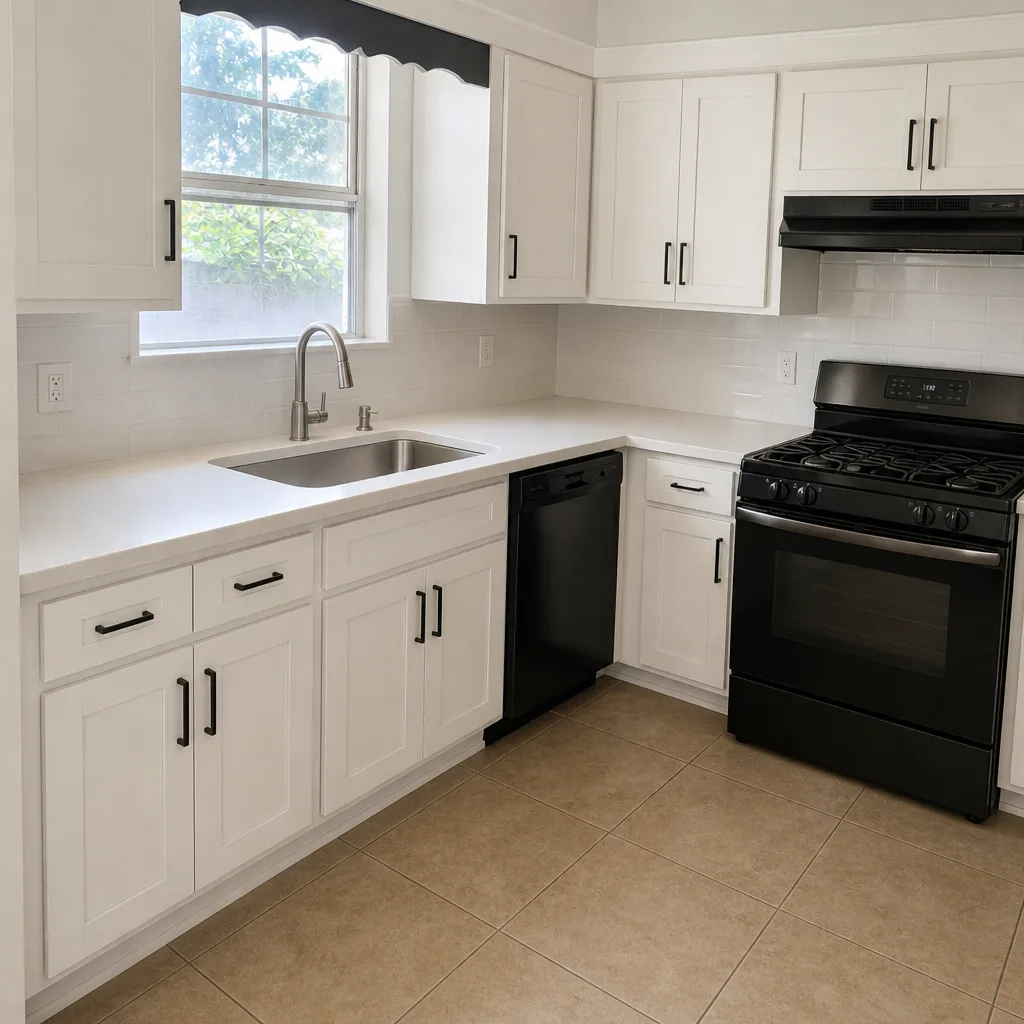 After
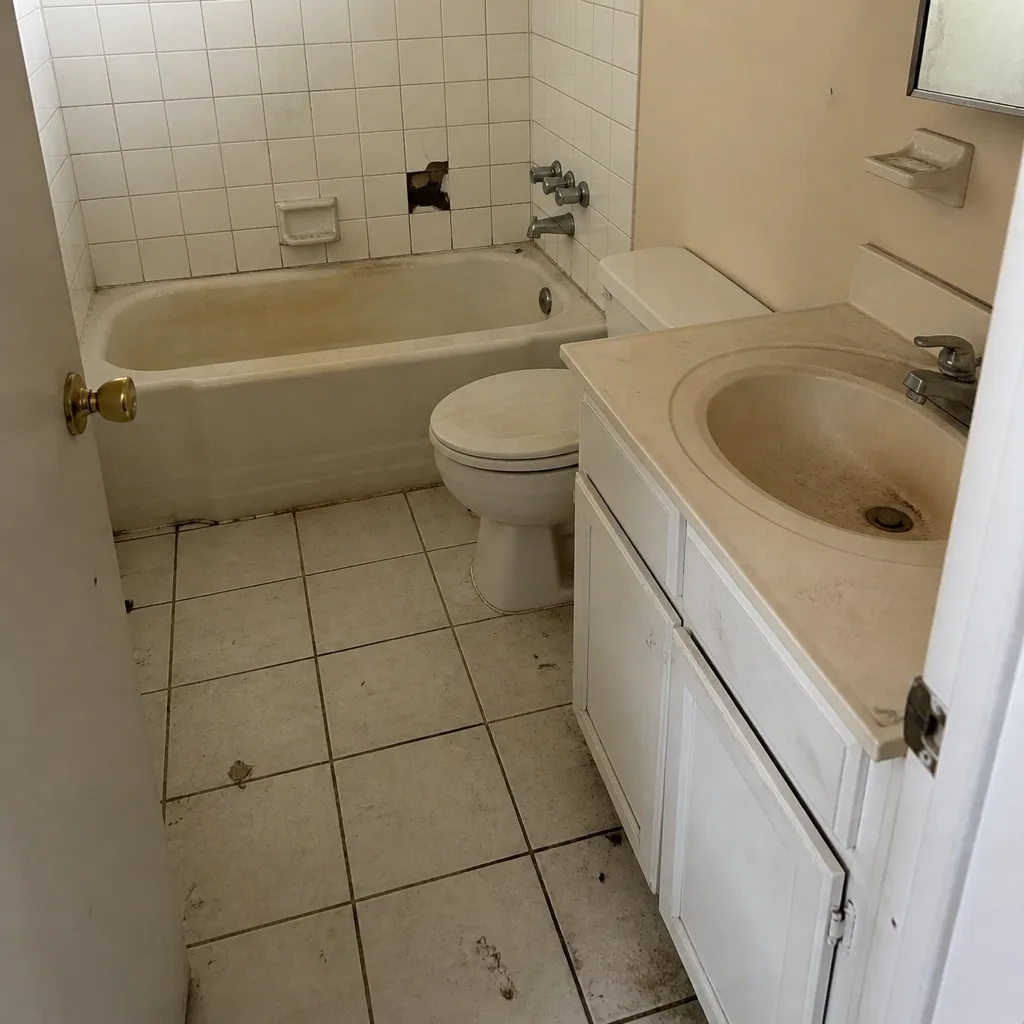 Before
 After
When to Call a Professional
Some bathroom work, done by an experienced homeowner, is safe: paint, fixtures, a vanity swap. Everything on the other side of the wall belongs to a pro. If your project moves plumbing or a drain, adds an electrical circuit, touches the waterproofing over a shower, or involves anything structural, you’re looking at permit-required work where a mistake means a leak behind tile that shows up months later. Old galvanized or corroded plumbing in older Richardson homes is particularly common and often revealed only once the wall is open. When that happens, having a licensed team on-site with a plan, a price, and a schedule keeps the project moving instead of stalled. Our technicians have up to 12 years of experience, our workmanship is covered by the 730-Day Done Right Promise, and our calls are answered by a live person, 24/7. Groundwork Construction Co. of Richardson offers free estimates in Richardson. Call (833) 954-4985 to schedule yours.
Frequently Asked Questions
A full bathroom remodel in Richardson typically takes six to ten weeks end to end, and a cosmetic refresh takes two to three weeks. A full gut with a layout change often runs ten to fourteen weeks. The biggest variable is material lead time, not installation speed.
Only a cosmetic refresh without plumbing or electrical changes finishes in two weeks. A full gut cannot, because permitting, rough-in inspection, waterproofing cure time, and tile and vanity lead times add up to more calendar than that. A contractor who promises two weeks on a full gut is quoting installation only, not the full project.
Yes, for anything that moves plumbing, adds an electrical circuit, or involves structural work. A cosmetic refresh typically doesn’t require a permit. If your project involves a new drain location or relocated fixtures, expect a permit and an inspection before walls close. We pull permits and pass inspections as part of the job.
The two biggest delays are material lead times and inspection scheduling, and both tend to be weeks rather than days. Special-order tile, custom vanities, and glass enclosures are the most common culprits. Ordering early, before demo, is the single best way to protect the calendar.
That depends on what your contract says, which is why the completion date and delay clause should be in writing before you sign. A well-written contract defines substantial completion, lists excusable delays, ties payments to milestones, and states the workmanship warranty term. Our projects are backed by the 730-Day Done Right Promise.
Single-phase is almost always cheaper and faster. Splitting a remodel into phases means paying mobilization costs twice and running into the same lead times twice. The exception is a project where you’re waiting on funds rather than materials, in which case a written schedule that front-loads the plumbing and rough-in is the right call.
If your remodel is part of a larger project, our guides to Groundwork Construction Co. of Richardson home, Driveway & Pavers in Richardson, and Fence Installation in Richardson all cover their own timelines and permit cycles, so you can sequence the work rather than learn the schedule the hard way.
The Bottom Line
Two weeks is installation time, not project time. A realistic Richardson bathroom remodel runs six to ten weeks for a full gut, two to three weeks for a cosmetic refresh, and ten to fourteen weeks if you’re moving plumbing. The calendar is dominated by three things: material lead times, permit and inspection scheduling, and trade sequencing, and only one of those is really under the contractor’s control. Lock your selections before demo, get a written completion date, and pay against milestones. Do that, and the timeline you’re quoted is close to the timeline you’ll live through. Skip it, and you’ll learn the difference between the two the hard way.
Groundwork Construction Co. of Richardson has been in business since 2014 and proudly serves local communities. We offer no-hassle upfront pricing so the number you see is the number you pay, and our standing promotions include $1,000 off projects over $10,000, a free project estimate and design consult, and 0% financing for 18 months. Every job is backed by the 730-Day Done Right Promise. Call (833) 954-4985 for your free estimate.
Written by the team at Groundwork Construction Co. of Richardson.