
Last updated November 18, 2026






Free written scope consultation - allowances, timeline, and change-order rules on paper before a single trade is scheduled
Windows & Doors Troubleshooting: Common Problems and How to Fix Them
A door that won’t latch in summer and latches fine in winter isn’t a hardware problem. It’s your house moving, and that’s information worth understanding before you replace the lockset. In Richardson, we see this pattern constantly: a homeowner replaces the strike plate three times before anyone checks whether the frame has shifted. Most window and door problems you’ll call a contractor about are either a twelve-dollar fix or the first symptom of something structural. Without the diagnostic logic to tell them apart, you’re either overpaying for a minor part or underreacting to a real failure. This guide gives you that logic. You’ll learn how to trace a draft to its actual source, decode what window condensation location is telling you, map door misalignment to root causes, and know exactly when to stop and call.
Quick Answer
Most window and door problems fall into three categories: hardware and weatherstripping failures that a homeowner can fix for under $50, installation and adjustment issues that need a trained hand, and symptoms of house movement (settling, foundation shift, frame rot) that require a professional assessment before any cosmetic repair. The single most useful diagnostic is location: whether a problem shows up seasonally, whether moisture appears inside, outside, or between glass panes, and whether a door drags at the top, the latch, or the floor will narrow the cause faster than anything else. If a symptom changes with the seasons or worsens over months, treat it as structural until proven otherwise.
Styles & brands we work with
- Kitchen remodeling
- Bathroom remodeling
- Home additions & ADU
- Roofing
- Windows & doors
- Driveway & pavers
- Fence
Table of Contents
- The Homeowner’s Decision Tree: DIY, Pro, or Structural Flag
- Diagnosing Draft Sources Accurately Instead of Guessing
- What Window Condensation Location Tells You
- Door Alignment Problems and Their Real Root Causes
- Which Quick Fixes Are Legitimate Repairs and Which Are Band-Aids
- Richardson-Specific: Heat, Clay Soil, and What They Do to Your Openings
- When Windows Are Beyond Troubleshooting
- A Seasonal Maintenance Routine That Prevents Most of These Problems
The Homeowner’s Decision Tree: DIY, Pro, or Structural Flag
Before you buy a single part, run every symptom through three questions. First: did this problem appear suddenly or gradually? A latch that stopped catching overnight after a cold snap points to one thing; a door that has dragged progressively for eighteen months points to another. Second: is it isolated to one opening, or showing up on multiple doors and windows on the same side of the house? Multiple failures along one wall is a house-level signal, not a product defect. Third: does the problem come and go with weather or temperature? Seasonal behavior almost always means movement rather than failure.
Here’s how the answers sort out:
- DIY territory: A single window that rattles in wind (weatherstripping), a door handle that’s loose (screws), a threshold sweep worn thin, a sash that sticks in humid weather but frees up in dry weather, a screen that needs re-splining.
- Professional territory: A window that won’t lock securely, a door that swings open on its own, a multi-point lock that no longer engages, failing seals on a window unit, a door that requires lifting to close. These involve adjustment and alignment that need the right tools and the right read of the frame.
- Structural flag – stop and assess: Any door that won’t latch in one season and does in another, cracks in drywall radiating from door corners, a door frame that’s visibly out of square when you check it corner to corner, multiple sticking doors on one wall, or a door that suddenly starts dragging at the bottom after years of operation.
That third category is where homeowners get hurt financially. Replacing a lockset on a door that’s misaligned because of movement doesn’t fix anything and costs you $150 to $400. In our experience across Richardson, a door that changes behavior with the seasons is telling you something about the slab beneath it, and the repair is not at the door.
Diagnosing Draft Sources Accurately Instead of Guessing
Almost everyone guesses wrong about where a draft comes from. The cold spot you feel near a window is frequently not air leaking through the sash at all – it’s the glass itself radiating cold and setting up a convection current. Homeowners seal the wrong thing, the draft persists, and the window gets blamed. Test before you caulk.
The candle test remains the most reliable low-tech tool. On a windy day, hold a lit candle (or a thin strip of tissue, if you’d rather not use flame near curtains) and move it slowly along these locations in this order:
- Along the sash perimeter, inside and out. A flickering flame here means the weatherstripping or the sash seal has failed.
- Along the frame-to-wall joint. Movement here means the gap between window frame and rough opening has opened up – common as caulk ages in Texas heat.
- At the sill and the sill pan. Air at the bottom edge often comes from outside, not from the room.
- Around the trim and casing. Air behind the trim frequently tracks from an entirely different gap.
- At the electrical outlets on the same wall. This is the test most people skip, and it’s the one that saves them money. A draft that reads at outlets rather than the window means your problem is wall assembly, not window.
For a faster and more precise read, an infrared thermometer (under $30 at most hardware stores) shows you the actual temperature of every surface. Scan the glass, the sash, the frame, and the drywall around the opening. A cold glass surface with a warm frame points to the glazing itself. A cold band around the frame points to air infiltration. A cold patch on drywall next to the window points to insulation. In Richardson, where summer heat dominates more of the year than cold, an IR thermometer is just as useful in July for finding where cool air is escaping rather than where heat is coming in. We’ve walked into homes where the “drafty window” complaint turned out to be an unsealed top plate twenty feet away; the thermometer found it in minutes.
What Window Condensation Location Tells You
Condensation on windows is one of the most misread signals in a house. Where the moisture appears tells you far more than that it appeared at all. Three locations, three entirely different meanings:
- Condensation on the inside of the room-side glass. This is a humidity problem inside the house, not a window failure. Your interior relative humidity is too high for the outside temperature. In Richardson, this shows up in winter mornings and in bathrooms and kitchens year-round. Fix the moisture source – ventilation, exhaust fans, a dehumidifier – not the window.
- Condensation on the outside of the exterior glass. Counterintuitively, this is a good sign. It means the window is insulating well; warm, humid outside air is meeting a cool outer pane. No action needed.
- Condensation or fogging between the panes. This is a seal failure. The insulating gas has leaked out and moisture has gotten into the space, and it will not clear up on its own. The window unit needs service or replacement.
That middle category is the one that surprises people, and it’s the one we explain most often. A window that fogs on the outside on a humid Richardson morning is working exactly as designed. Call someone about a window that fogs between panes, especially if you can see a visible film or water line inside the glass assembly. Seal failure usually first appears at the bottom edge of the unit and climbs upward over months. A single failed seal out of a dozen windows on the same installation often points to a manufacturing defect covered under warranty; a cluster of failures across one wall points to something else, and that’s worth a professional look before you order a full replacement. If you’re already weighing whether the whole set is due, our guide to windows and doors in Richardson walks through replacement timing and options.
Door Alignment Problems and Their Real Root Causes
A door that doesn’t close right is a symptom with four common causes, and they look similar to a homeowner but demand completely different fixes. Misreading this is the second-fastest way to waste money after misdiagnosing a draft.
Settling. The house has moved, and the door opening is now slightly out of square. The tell is a seasonal pattern – sticks in summer, fine in winter, or vice versa – plus sticking at one corner rather than along an entire edge. North Texas clay soils expand and contract dramatically with moisture, and Richardson homes sit on some of the most active soil in the region. This is not a lock or hinge problem, and adjusting hardware will only delay the inevitable.
Hinge failure. The tell is a visible sag at the top of the door, a gap at the top on the hinge side, and dragging on the strike side at the bottom. Screws pull loose from years of use, or the jamb has softened. A loose hinge is a legitimate adjustment; if the jamb itself is chewed up, the fix is structural.
Frame rot. The tell is soft wood you can push a screwdriver into anywhere along the frame, a door that seems swollen or persistently out of alignment in one spot, and often visible staining or discoloration at the bottom corners. In Richardson, rot typically starts at the sill or the bottom of the jamb, where splash and irrigation keep the wood wet. This is the cause most often missed, and replacing hardware on a rotting frame is money thrown away.
Foundation movement. The tell is multiple doors or windows in the same area misbehaving together, drywall cracks, and doors that won’t latch on one side of the house and won’t close on the other. This is the one to take seriously. If you can lay a straightedge across a door frame and see a gap, or if you find yourself pushing hard to get the deadbolt to line up, get an assessment. Slab movement is common in Richardson and the earlier it’s caught, the less it costs.
One more note on locksets: a lockset that stops working is often blamed for a door that’s misaligned. Before you replace it, check whether the door itself is sitting square in the frame. If the door’s geometry is off, the new lockset will fail the same way the old one did. Unless the mechanism itself is broken – the key turns but nothing retracts – the lockset is probably not the problem.
Which Quick Fixes Are Legitimate Repairs and Which Are Band-Aids
Weatherstripping, spray foam, and caulk are real tools, and used right they solve real problems. Used wrong, they hide problems that come back bigger. Here’s the honest breakdown.
Legitimate repairs:
- Replacing worn weatherstripping on a door. If the sweep and the perimeter seal are compressed flat, replacing them is a genuine fix that solves drafts and water intrusion. This is the most common and most worthwhile DIY repair on a door.
- Re-caulking the exterior perimeter of a window or door frame. Caulk shrinks and cracks in Texas sun within a few years. Replacing failed exterior caulk is legitimate maintenance and prevents real water damage. Use a high-quality exterior sealant rated for masonry or siding, as appropriate.
- Adjusting door hinges for minor seasonal binding. A quarter-turn on a hinge or a hinge-shim to lift a dragging corner is a proper fix, not a hack – provided the door isn’t settling. For a true settling problem, adjustment buys a season or two at best.
- Replacing a door sweep at the bottom edge. Straightforward, effective, and prevents both air and water entry at the sill.
Band-aids that will not fix the actual problem:
- Spray foam into a gap you haven’t traced to its source. Foam expands unpredictably and can distort a frame or trap moisture against wood that was already wet. If you don’t know why the gap is there, don’t seal it yet.
- Caulk over failed window unit seals. If the issue is between the panes, exterior or interior caulk does nothing for the failed gas seal. The unit is the problem.
- Adding weatherstripping to a door that sticks. This makes the drag worse. Weatherstripping solves drafts, not binding.
- Adjusting strike plates to compensate for frame movement. This is the classic Richardson band-aid: the strike plate gets moved an eighth of an inch, then another eighth, then another, until the hardware is misaligned to the point it won’t work properly. Each adjustment buys a few months while the underlying movement continues.
As a rule: if a symptom comes back within a season, the quick fix wasn’t wrong, but it was incomplete. Stop reapplying it and figure out what’s actually moving.
Richardson-Specific: Heat, Clay Soil, and What They Do to Your Openings
Richardson homes age in a particular way, and it helps to know what our specific climate and soil do to windows and doors. The Dallas-area clay soil – expansive and moisture-driven – swells in wet seasons and shrinks in dry cycles. That movement is felt directly in door openings, which is why so many Richardson homeowners report doors that stick in late summer and free up after fall rain. A slab foundation that’s riding the soil cycle will tilt doors and windows out of true in response.
Then there’s the heat. Exterior caulk, weatherstripping, and window seals take a beating through a Richardson summer. UV exposure degrades the rubber in weatherstripping faster here than in cooler climates – expect to inspect and replace door sweeps and seals more frequently than guides written for a generic national audience suggest. Exterior caulk lines on sun-facing windows often fail first on the west and south sides of the house. Two things we see commonly in Richardson: west-facing windows with early seal failure on units that are otherwise fine, and door sweeps on south-exposed entries that are worn flat within a few summers.
Richardson also has older housing stock on the west side of town, where original windows from the 1960s through the 1980s are still in service. On those, weatherstripping and seal failures aren’t just about drafts – they’re often about components that were never particularly robust to begin with and have now reached end of life. That’s a different conversation from a modern window with a failed unit, and it’s worth a professional look to tell them apart.
On the code side: window replacements in Richardson generally require permits when the rough opening changes or when the size, type, or configuration of the window changes, and installations need to meet the energy code in effect at the time. If you’re replacing rather than repairing, confirm with the city before any work starts. We pull permits and pass inspections on every replacement project we handle, and we walk homeowners through the code question before we order anything. It’s not a piece of paperwork we skip.
When Windows Are Beyond Troubleshooting
Not every problem is worth troubleshooting. There’s a point where you’re spending money adjusting rather than repairing, and it pays to know where that line sits.
- Failed seals on multiple units, especially on the same wall or the same side of the house. One failed window unit is a service item. A cluster of failures across a single elevation suggests a systemic issue and the conversation shifts to replacement.
- Window frames that are soft to the touch or show rot. Repairing a failing sash on a rotting frame is money into a hole, literally. The frame needs professional attention before any window hardware matters.
- Windows that don’t lock or open. A window that won’t latch is a security and safety issue, not just an inconvenience or a draft problem. Don’t leave this.
- Single-pane windows past thirty years old. In a Richardson summer, single-pane glass radiates heat regardless of how much weatherstripping you add. Repairing the seals doesn’t change the physics.
- A window that consistently shows interior fogging, unit leaks, or sash movement beyond adjustment. These signs add up to replacement more reliably than repair.
The math here is straightforward: a repair that buys two or three years on a window nearing end of life makes sense. A repair that costs half the price of replacement and buys one year does not. We help Richardson homeowners run that math honestly – and if replacement is the right answer, we talk through product options like Andersen and Marvin, both of which we install, along with what actually matters for this climate. A window chosen for Maine winters is not the window for this house, and vice versa.
Common Mistakes to Avoid
- Replacing hardware before checking alignment. A new lockset on a misaligned door fails the same way the old one did. Check whether the door sits square in the frame before you spend $150 on parts.
- Assuming a draft is coming from the window. In Richardson, drafts often track from electrical outlets, unsealed top plates, or a gap in wall assembly. The candle test and an inexpensive IR thermometer narrow it in minutes. Guess wrong and you caulk the wrong thing.
- Caulking exterior joints without addressing the gap behind them. Exterior caulk over a gap that’s still open behind it is a dam, not a seal. It holds water in against the frame instead of keeping it out.
- Repeatedly adjusting a door’s strike plate to compensate for frame movement. Each adjustment gets you a few months. If you’re on your third adjustment, stop – the frame is telling you something.
- Treating interior condensation as a window failure. Moisture on the room-side glass means indoor humidity is too high. Add ventilation and exhaust, not window service.
- Skipping the permit on a window replacement. Richardson permits and inspections exist for good reason; a replacement that changes unit size or type needs one. A contractor who doesn’t want to pull the permit is telling you something.
- Assuming a replacement window will fix wood rot or settling. New windows in a rotting or moving frame fail early. Fix the underlying issue first, then the window.
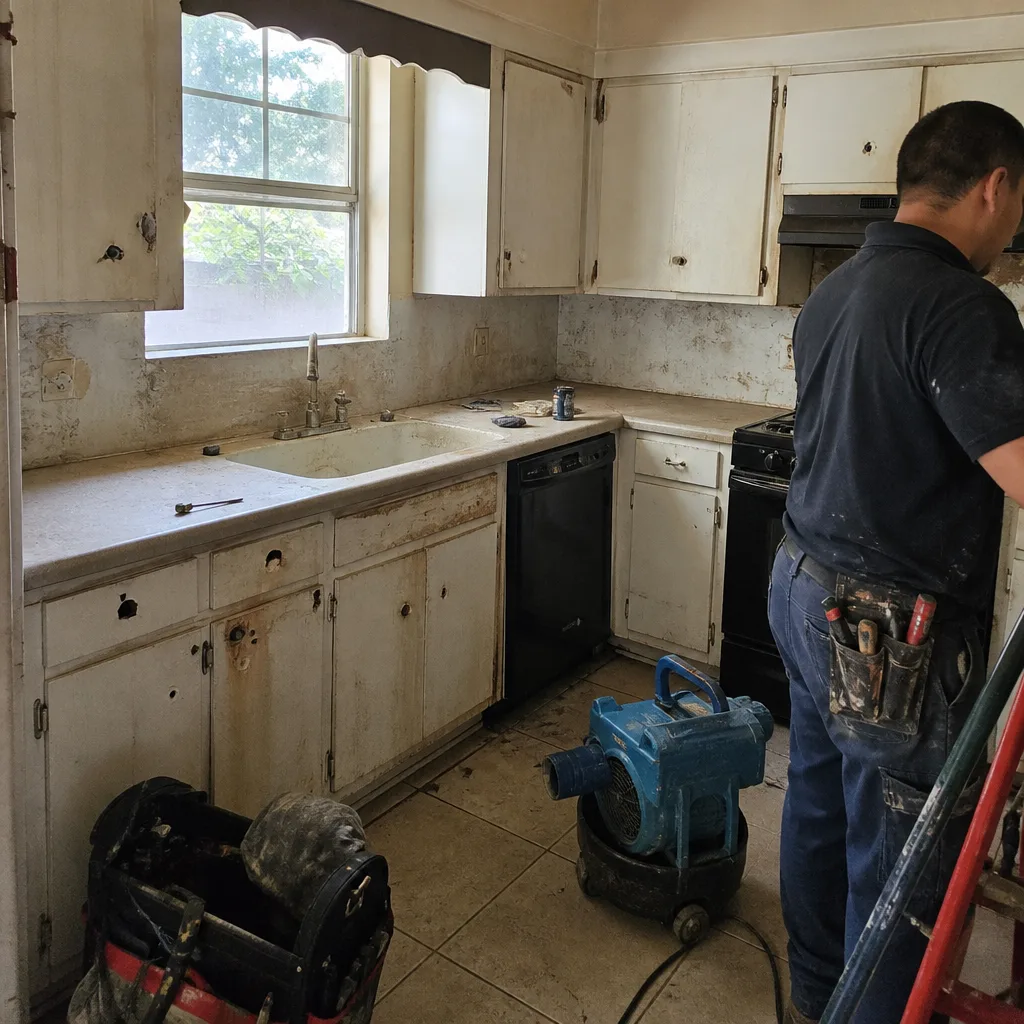
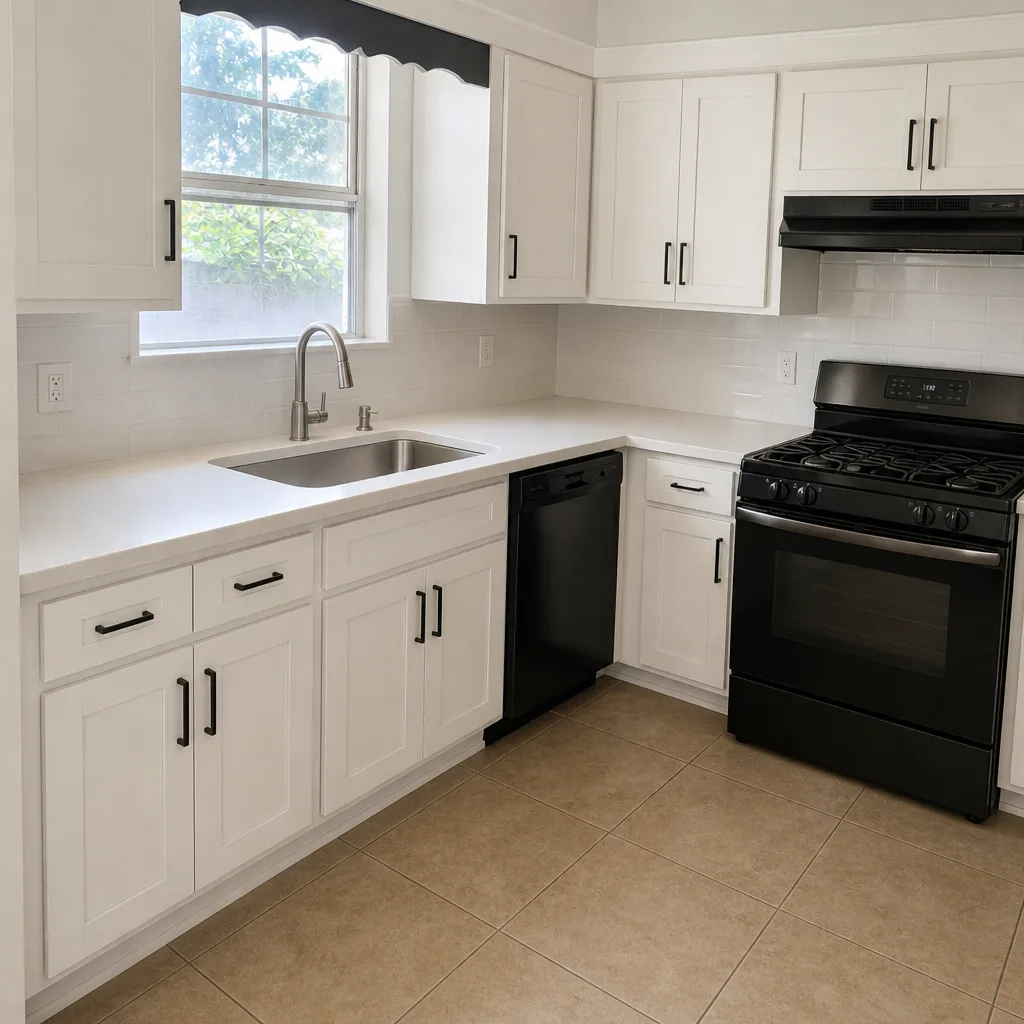
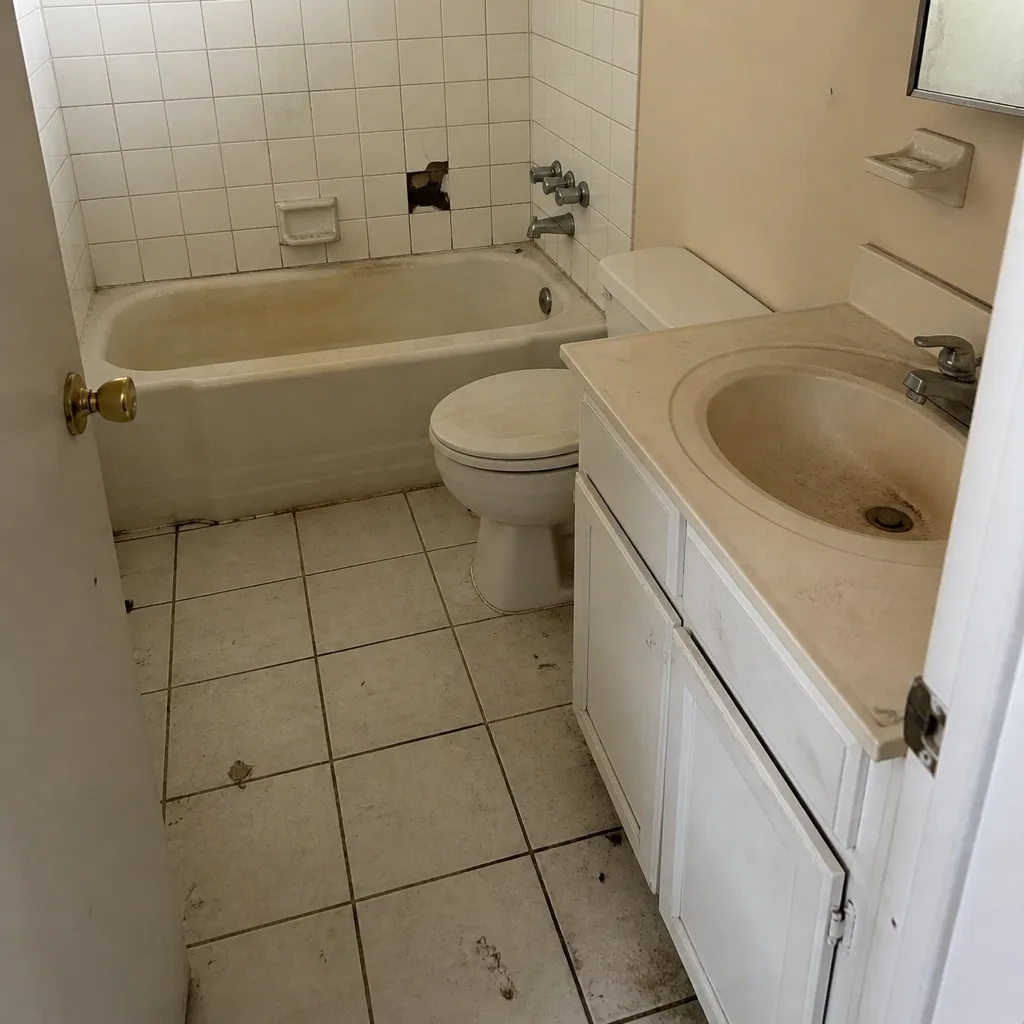
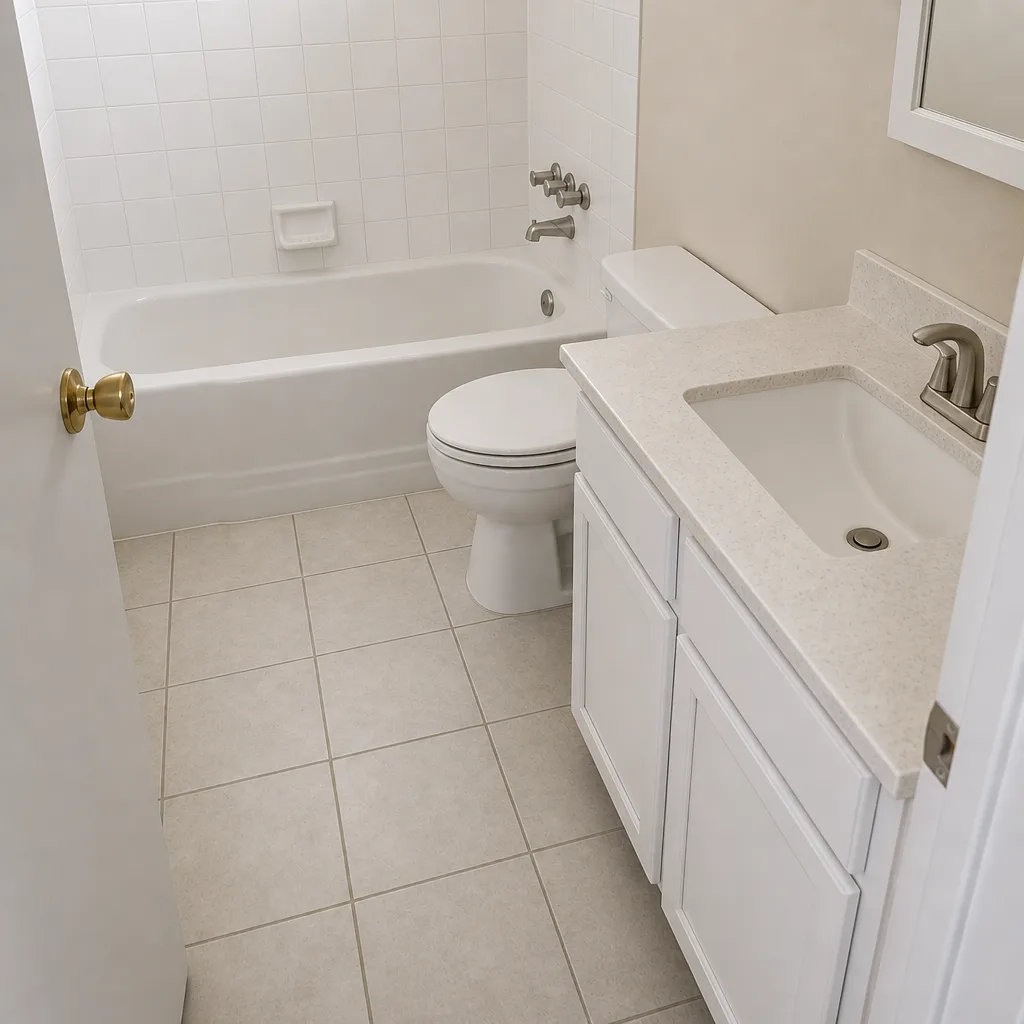
See the difference
 Before
 After
 Before
 After
 Before
 After
When to Call a Professional
Call when a symptom changes with the seasons, when the same problem shows up on multiple doors or windows in one area, when you can feel soft wood anywhere along a frame, when a window won’t lock, when condensation appears between panes, or when you’ve applied the same quick fix twice and it isn’t sticking. Those are signals to stop diagnosing and start getting eyes on the actual cause. For exterior door and window work on the same house, it’s also worth reviewing your exterior envelope as a whole – fence, entry, and opening alignment all respond to the same soil and settle the same foundation. Groundwork Construction Co. of Richardson offers free estimates in Richardson; call (833) 954-4985 to schedule yours. A technician background-checked and arriving in uniform will assess the diagnostic question with you, and you’ll get an upfront price in writing before any work begins.
Frequently Asked Questions
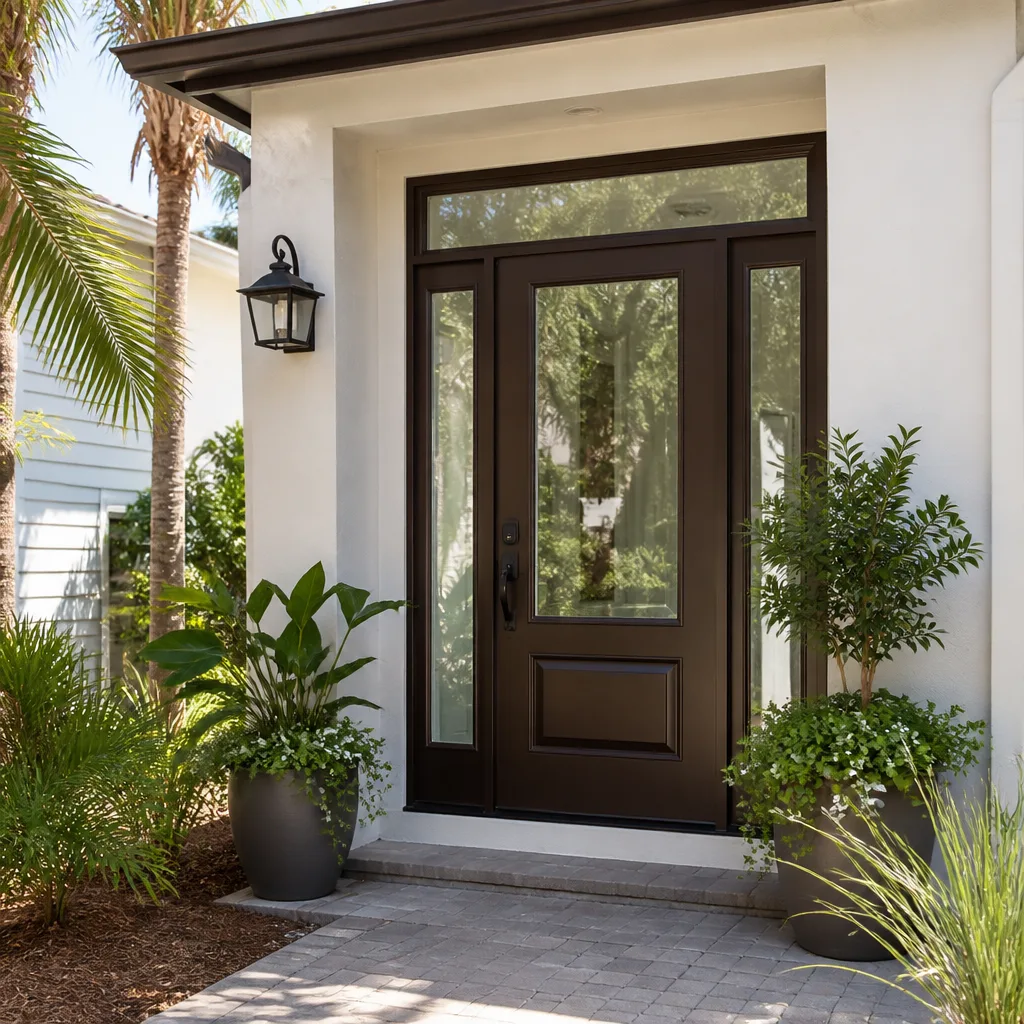
Your house is moving. In Richardson, expansive clay soil swells with summer moisture and door openings shift with it, which is why a door that sticks in late summer often frees up in the fall. This is a settling or foundation signal, not a hardware failure, and it’s worth a professional look before you start adjusting the strike plate. Call (833) 954-4985 for a free estimate on a diagnostic visit.
No. Interior condensation means the humidity inside your home is too high for the outdoor temperature – a ventilation and moisture issue, not a window failure. Condensation between the panes is the seal failure signal. If you’re seeing it between the panes on multiple windows, that’s worth a call to (833) 954-4985 for a free estimate.
Minor window repairs in Richardson generally run from around $75 to a few hundred dollars depending on whether it’s weatherstripping and adjustment or a hardware or unit problem. Full unit seal failures on a double-pane window typically start in the mid-hundreds per unit. The only way to know which category you’re in is a quick assessment. Call (833) 954-4985 for a free estimate with an upfront price.
On a Groundwork project, no. We give you a written, upfront price with line items before any work starts, and that’s the number you pay. No change orders mid-job unless you the homeowner decide to change the scope. Call (833) 954-4985 to schedule your free estimate.
Yes. Any replacement that changes the size, type, or configuration of an opening needs a Richardson permit, and we pull it and make sure the installation passes inspection. A contractor who wants to skip the permit on Replacing is a warning sign. Call (833) 954-4985 for a free estimate and we’ll walk you through what the permit requires for your project.
Correct. Weatherstripping solves drafts; it doesn’t solve binding or dragging. If a door drags and leaks, the drag is the symptom to diagnose first. Call (833) 954-4985 for a free estimate and we’ll tell you which one you’re dealing with.
The Bottom Line
Themost useful thing you can do with a window or door problem is figure out which category it’s in before you spend money. A pattern that changes with the seasons means the house is moving. A cold band around a frame but not across the glass means air infiltration. Fogging between panes means the seal is gone. Interior condensation means the house is too humid – not that the window failed. Weatherstripping, caulk, and hinge adjustment are honest repairs; strike-plate adjustments to compensate for settling, spray foam into untraced gaps, and new locksets on misaligned doors are band-aids that cost more the longer you use them. When the pattern points to structure, settle, or rot, call a professional. If you’re in Richardson and want an honest read on what you’re looking at, our team is glad to help – from your homes’ entryways to the driveway and paver work out front, we work the whole envelope of the house.
Written by the team at Groundwork Construction Co. of Richardson.