Last updated November 18, 2026


Free written scope consultation - allowances, timeline, and change-order rules on paper before a single trade is scheduled
Fence Installation Warning Signs Every Homeowner Should Know
If a fence contractor can’t tell you exactly how deep they’re setting your posts and why, stop the conversation. That single detail predicts more installation failures than any other factor we see in the field, and it’s the one most homeowners never think to ask about. The contractors who cause the worst problems aren’t the ones with obvious red flags. They show up with the lowest bid, a handshake, and no paper trail. Six months later the posts are heaving out of the ground, the gate sags, and the phone number on the invoice is dead. This guide breaks down the specific, pre-contract signals that separate accountable builders from liability risks, with the Richardson details that matter for local soil, weather, and code. Read it before you sign anything.
Quick Answer
The biggest fence installation warning signs are: a contractor who won’t put post depth and concrete specs in writing, who skips or dismisses the 811 utility locate, who uses vague material terms like “quality wood” instead of grades and species, who demands more than 30-40% upfront before materials hit your property, and whose “workmanship warranty” has no enforceable terms. Any one of these is a reason to walk. Two or more means you’re looking at a structural risk, not a paperwork problem.
Styles & brands we work with
- Kitchen remodeling
- Bathroom remodeling
- Home additions & ADU
- Roofing
- Windows & doors
- Driveway & pavers
- Fence
Table of Contents
- Warning Sign 1: No Post Depth or Concrete Specs in Writing
- Warning Sign 2: Skipping the 811 Utility Locate
- Warning Sign 3: Vague Material Specifications
- Warning Sign 4: Unenforceable Warranty Language
- Warning Sign 5: Backloaded Payment Demands
- Warning Sign 6: Permit and HOA Avoidance
- Common Mistakes to Avoid
- Frequently Asked Questions
Warning Sign 1: No Post Depth or Concrete Specs in Writing
Here’s the number that matters most on your entire fence quote: post depth. If your contractor can’t tell you how deep they set posts and what concrete mix they’re using, you’re not looking at a paperwork issue. You’re looking at a structural risk that will show up as fence lean within two or three seasons.
In Richardson, the clay-heavy North Texas soil expands and contracts dramatically with moisture. We get long dry spells followed by heavy spring rain, and that cycle pushes short-set posts upward and sideways. A post set 18 inches deep in a shallow concrete plug will heave. A post set 24 to 30 inches deep with a proper footing and adequate concrete won’t. The difference in labor is real, and cheap contractors cut it because you can’t see the depth once the hole is filled.
A legitimate quote puts these specifications in writing:
- Post depth: For a standard 6-foot privacy fence in Richardson clay, we specify a minimum of 24 inches below grade, with deeper footings on gates and corner posts that carry more load.
- Hole diameter: Usually three times the post width. An 8-inch-deep post in a 6-inch hole is not a footing.
- Concrete mix: A stated mix, not “concrete.” Rapid-set or a specified PSI rating tells you they’ve thought about the soil and drainage.
- Crown and drainage: The quote should note how concrete is crowned above grade so water sheds away from the post rather than pooling at its base.
When a contractor refuses to commit to these numbers on paper, the refusal is the signal. They either don’t know the correct depth or plan to save labor on your dime. In Richardson, where soil movement does the work of a demolition crew over a few short years, post depth is the single strongest predictor of whether your fence is still standing straight in year five. We’ve seen plenty of fences in Richardson fail not because of bad materials, but because the foundation under them was an afterthought. If you want the full picture of how a proper installation should be scoped from the ground up, our Fence Installation in Richardson page walks through the whole process we follow.
Warning Sign 2: Skipping the 811 Utility Locate
Any contractor who treats the 811 utility locate call as optional is exposing you, not just themselves, to legal and financial liability. In Texas, you call 811 and utilities mark their lines before any digging. Skip that step and you own the consequences.
Here’s what homeowners don’t realize: the ticket and the responsibility often default to the property owner. If a crew drives a post through a buried gas line, irrigation main, or fiber optic run because nobody called 811, the cost of the repair and the service interruption can land on you. Some utility providers bill the property owner directly for damage. And a hit on a gas line is a genuine safety incident, not just a bill. That’s why our crews treat the locate call as a hard stop on every job, and why we schedule installation around the mark-out window rather than digging first and apologizing later.
Watch for these conversations, all of which are red flags:
- “It’s a small job, we don’t need to call.”
- “We’ve been doing this for twenty years, we know where the lines are.”
- “You call 811 if you’re worried about it” (shifting the duty to you after signing).
- Starting excavation before the locate tickets are marked and confirmed.
A grounded, professional contractor in Richardson builds the locate call into the schedule. It’s a few days of lead time and it protects everyone. If a contractor brushes it off, they’re either cutting corners or don’t understand the risk they’re putting on your property. Either way, that’s a structural liability you don’t want to inherit.
Warning Sign 3: Vague Material Specifications
“Quality wood,” “standard pickets,” and “premium materials” are not specifications. They’re phrases designed to let a contractor substitute whatever’s cheapest on delivery day. A real quote names species, grade, and finish, because that’s what separates a fence that lasts fifteen years from one that’s warped and gray in three.
Here’s what a legitimate material spec looks like versus the words that should make you ask harder questions:
- Instead of “quality wood”: Western red cedar or treated pine, with a stated grade and moisture content. Specifying the species matters in Richardson because the wrong wood cups and checks fast in our summer heat and humidity swings.
- Instead of “standard pickets”: Exact board dimensions (e.g., 5/8-inch thick, 5.5-inch wide), picket spacing, and total linear footage so you can verify the count.
- Instead of “durable metal”: Gauge, coating, and a named brand. When metal fencing is on the table, brands like Boral and CWS show up on proper specs because the coating and system matter to longevity, not just the color.
- Instead of “concrete”: Mix and PSI, as covered above.
- Fasteners and hardware: Galvanized or stainless, screw-driven rather than nailed, with hinges rated for the gate weight.
Ask for the written spec and compare it line by line to what gets delivered. If a contractor can’t tell you the species, the grade, or the gauge, they haven’t priced your fence. They’ve priced a version of it and left the difference in their margin. And when a branded system is part of the quote, a named manufacturer or verified brand partner is a signal of accountability, because you can look up the product yourself. The fence, like every trade, is built to last and backed in writing when the materials are spelled out rather than implied.
Warning Sign 4: Unenforceable Warranty Language
A “workmanship warranty” that says nothing specific isn’t protection. It’s boilerplate designed to sound like a promise while giving you nothing to enforce. The warning sign is language so vague that any failure can be argued away as “normal wear” or “not covered.”
To be enforceable, a workmanship warranty needs to state its length in plain terms, define exactly what’s covered, define what isn’t, and explain how a claim is handled. Read the warranty before you sign the contract, and pay attention to these tells:
- Length stated in months, not “lifetime” or “limited.” A real term is a number. We back our fence work with our 730-Day Done Right Promise, which is a defined, two-year guarantee you can point to.
- Specific covered items. Post settling, gate sag, and fastener failure should be named, not buried under “workmanship” alone.
- Clear exclusions. Wind, vehicle damage, and acts of nature are legitimately excluded, but a warranty that excludes “all damage” is none at all.
- A named way to file a claim. A phone number, an address, a process. A warranty with no claims path is theater.
If the warranty language dodges every one of those points, assume it won’t be honored. That’s a contractor telling you, quietly, that they won’t stand behind the work. Our own policy is simple to state and to enforce: if it’s not done right, we make it right, and that’s why we can put a 730-day number behind the promise. Any warranty shorter or vaguer than what you’d expect on a long-horizon investment should be a reason to keep looking.
Warning Sign 5: Backloaded Payment Demands
A contractor demanding more than 30-40% upfront, before materials have actually arrived on-site, is a financial risk worth walking away from. Deposit-first is how homeowners become creditors of a contractor who overcommitted on jobs and can’t float the next one’s material cost.
Responsible payment structure follows the work. A legitimate fence quote typically maps progress to delivery:
- A reasonable deposit to secure materials, generally in the 30-40% range, not the whole job.
- A scheduled progress payment when posts and framing are set and materials are on the property.
- Final payment after installation is complete and you’ve inspected the fence, the gate, and the cleanup.
Watch for these specific warning signs:
- “We need 70% to place the order” with no material delivery confirmation.
- Any request for full payment before a single post is in the ground.
- Pressure to pay in cash with no invoice or receipt.
- A demand to pay before you’ve done any inspection.
Large deposits plus no paper trail is the combination that empties bank accounts. The right structure gives you a built-in inspection point before the bulk of the money leaves your account. And if cost is the real conversation, our no-hassle upfront pricing means the number you see is the number you pay, with 0% financing for 18 months available and $1,000 off projects over $10,000 to keep the project moving without stretching the deposit.
Warning Sign 6: Permit and HOA Avoidance
If a contractor says “you don’t need a permit for a fence” without checking, they’re either wrong or telling you what you want to hear. Fence permit requirements in Richardson and the surrounding towns change, and so do the rules for height, property lines, and corner-lot sight distance. A contractor who never asks about your HOA is setting you up to tear the fence down.
A fence installation that ignores the approval layer is a short-term saving followed by a long-term problem. Here’s how a legitimate contractor handles it:
- They ask about your HOA before quoting. Many Richardson-area HOAs limit fence height, set approved colors and materials, and require an architectural approval form before a single post goes in.
- They check current permit thresholds. Rules for when a permit is required vary by height and location, and a contractor working regularly in your area knows the current version.
- They respect setback and property-line rules. Encroaching on a neighbor’s line creates a dispute that costs more than the fence.
- They flag corner-lot sight lines. Local rules on visibility at intersections are easy to miss and expensive to fix after the fact.
Skipping the approval layer isn’t a paperwork shortcut. It’s a risk transfer, from the contractor to you, because you own the not-approved fence and you own the consequences. This is why working with one accountable, full-scope contractor across every trade matters. From foundation to finish line, we handle the paperwork and inspections alongside the construction so nothing on your fence gets missed. Our Groundwork Construction Co. of Richardson home page lays out the full scope of what we cover.
Warning Sign 7: No Local Footprint or Verifiable References
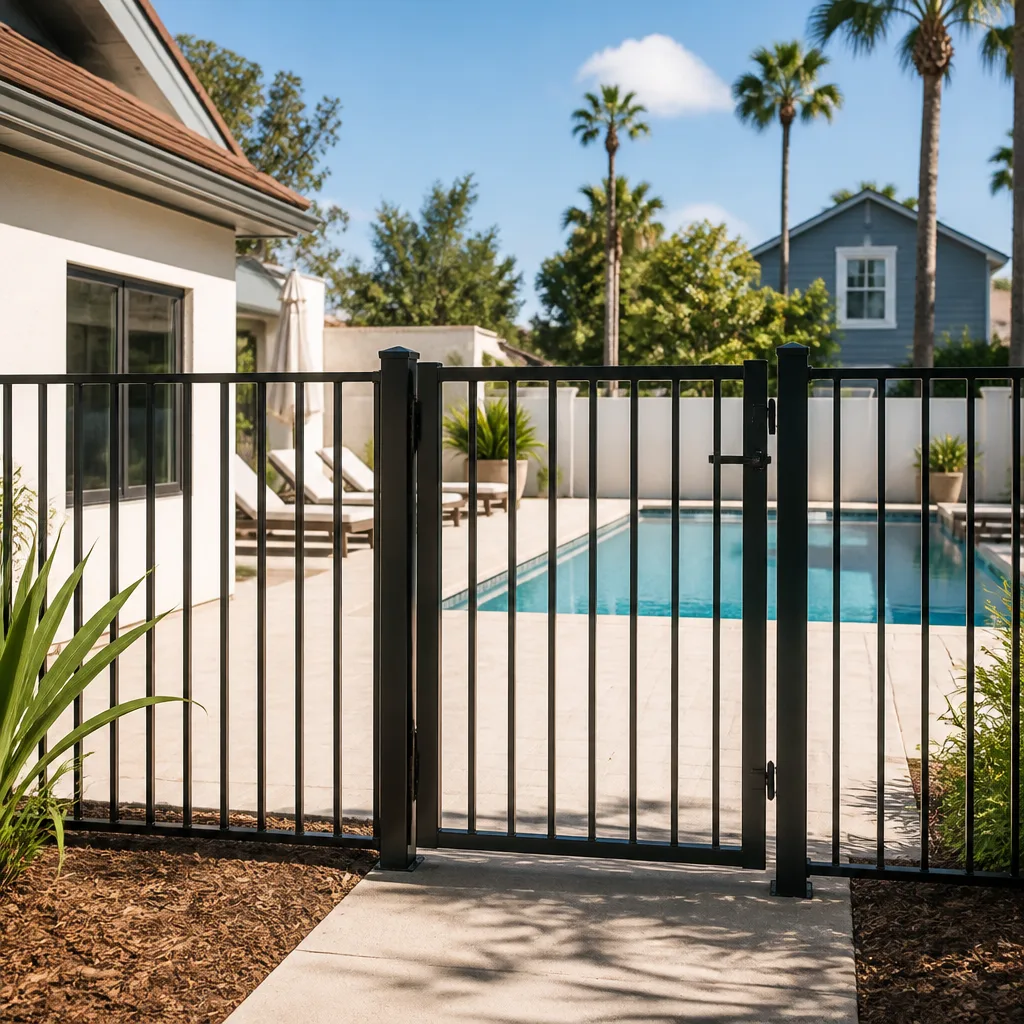
A fence company whose address doesn’t check out, whose references can’t be reached, and whose name you can’t find anywhere is a red flag before anyone touches a shovel. Local, verifiable roots are the single easiest signal to confirm, and skipping that confirmation is how homeowners end up with a crew that disappears after the check clears.
To vet a fence contractor’s local footprint in Richardson before you sign:
- Ask for recent references within driving distance and actually call them. A legitimate contractor can point to recent jobs in Richardson, Plano, or the surrounding area and expects you to check.
- Confirm a verifiable address and business contact. A company you can physically find is harder to disappear than a one-line flyer.
- Check that the crew arrives in marked identity. Our technicians are background-checked and arrive in uniform on every project, because professional presentation and verified trustworthiness aren’t optional on your property.
- Confirm the company answers its phone. A real local operation answers. Ours picks up live, 24/7, and there’s no voicemail black hole to fall into if you have a question mid-project.
None of this is about picking the biggest name. It’s about picking the contractor whose presence you can verify and whose accountability you can hold. A fence is a five-figure-or-so investment that should last a decade or more; a local contractor with verifiable roots is the difference between an asset and a liability.
Common Mistakes to Avoid
- Trusting the lowest bid without checking what it excludes. The lowest number often means shallower posts, thinner pickets, and no permit work. Compare line items, not totals.
- Skipping the 811 locate “because it’s a small job.” In Richardson, a gas or fiber hit on a “small” fence job can cost far more than the fence itself and it puts people at risk. The locate call is not optional.
- Accepting “quality wood” as a material specification. Without species, grade, and dimensions, the contractor chooses what shows up on delivery day, and it rarely goes in your favor.
- Signing a contract with a warranty that names no term and no claims path. A workmanship warranty you can’t enforce is a marketing paragraph, not a guarantee.
- Paying 70% upfront. Deposits above 30-40% before materials arrive shift the risk from the contractor to you. Structure payments to follow the work.
- Ignoring HOA and permit rules until after installation. Many Richardson-area HOAs set height, color, and approval requirements. Check first, install second.
- Skipping the post-payment inspection. Walk the fence, open and close the gate, check the post crowns and drainage before the final payment. Once you’ve paid in full, your leverage is gone.
See the difference
 Before
 After
 Before
 After
 Before
 After
When to Call a Professional
Some fence decisions aren’t DIY-friendly and shouldn’t be. If your yard has utility easements or you’re near a property line, if the ground is compacted clay that needs proper footings, if your HOA requires documented approval, or if you’re replacing a fence that’s already failed, call a professional. Those are exactly the situations where a wrong call costs the most. A buried gas or fiber line, a post set too shallow in Richardson clay, or an unapproved fence that has to come down are all problems that a trained crew avoids from the first day. Groundwork Construction Co. of Richardson offers free estimates in Richardson and the surrounding area. Call (833) 954-4985 to schedule yours.
Frequently Asked Questions
The single biggest warning sign is a contractor who won’t put post depth and concrete specs in writing. If they can’t or won’t tell you how deep they set posts and what concrete mix they use, you’re looking at a structural risk that will show up as fence lean in a few seasons. In Richardson’s clay soil, post depth is the strongest predictor of failure, so a vague answer here is a walk-away signal. Call (833) 954-4985 for a quote that spells it out.
Fence installation in Richardson typically runs a wide range depending on material, height, and linear footage, and a proper quote should break those out line by line rather than give a single lump number. Material choice – wood vs. metal vs. composite – drives most of the cost, and post depth and footing specs are part of what separates a cheap quote from a durable one. Call (833) 954-4985 for an exact quote – estimates are free.
Permit requirements in Richardson depend on fence height and location, and HOA rules often add their own layers on top. A legitimate contractor checks the current thresholds and asks about your HOA before quoting, rather than telling you it’s fine and moving on. If a contractor never mentions permits or approvals, that’s a warning sign. Call (833) 954-4985 and we’ll walk through what applies to your property.
With a written, line-item quote and upfront pricing, the number you see is the number you pay – no surprise change orders. The price changes only if you change the scope, and that should be papered before work resumes. A contractor whose bid grows after the first post goes in is a warning sign on the financial side. Call (833) 954-4985 to schedule a free estimate with transparent pricing.
For a standard privacy fence in Richardson’s expansive clay, we set posts a minimum of 24 inches below grade, with deeper footings on gates and corner posts. The clay swells and shrinks with our wet-and-dry cycles, which is why shallow, undersized footings heave and lean. Ask any contractor for their depth and footing spec in writing before you sign. Call (833) 954-4985 and we’ll give you ours in plain terms.
An enforceable workmanship warranty names a specific term in months, defines covered items like post settling and gate sag, lists clear exclusions, and gives you a real way to file a claim. Boilerplate language that says “lifetime” or “limited” with no details is a red flag that won’t be honored. Our fence work is backed by our 730-Day Done Right Promise, a defined two-year guarantee. Call (833) 954-4985 to talk through what’s covered.
The Bottom Line
The worst fence contractors don’t announce themselves. They show up with the lowest bid and no paper trail, and the bill comes due six months later when the posts heave out of Richardson’s clay. Protect yourself with the pre-contract signals: post depth and concrete specs in writing, the 811 locate treated as a hard stop, material grades named rather than implied, a warranty you can actually enforce, and a payment structure that follows the work. Any one red flag is reason to pause. Two or more means walk. A fence should last a decade, so choose the contractor who puts the commitment in writing.
Ready for a Fence That’s Done Right?
Groundwork Construction Co. of Richardson backs every fence with the 730-Day Done Right Promise: if it’s not done right, we make it right. Our technicians are background-checked and uniformed, our pricing is upfront with no surprises, and we offer 0% financing for 18 months plus $1,000 off projects over $10,000. Your call is answered by a live person 24/7, because a real question about your property shouldn’t wait until Monday. If your next project includes a new driveway to match the fence line, see Driveway & Pavers in Richardson, and if you’re planning a bigger outdoor build, our Home Additions & ADU in Richardson team can scope it alongside the fence work. Call (833) 954-4985 for a free estimate and design consult in Richardson.
Written by the team at Groundwork Construction Co. of Richardson.