Last updated November 18, 2026



Free written scope consultation - allowances, timeline, and change-order rules on paper before a single trade is scheduled
Windows & Doors Warning Signs Every Homeowner Should Know
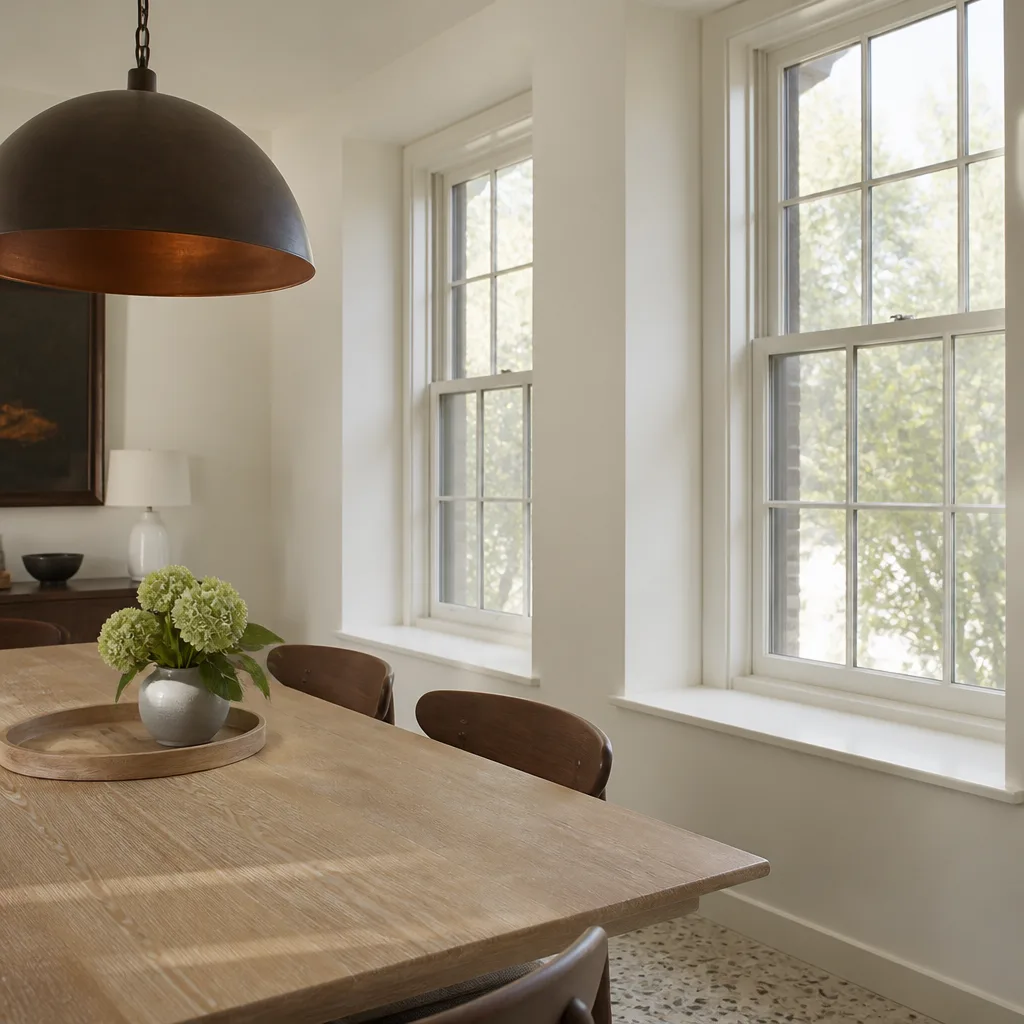
Condensation between your window panes isn’t an aesthetic issue. It’s a failed seal, a compromised thermal barrier, and a utility bill that’s been silently inflated for months. Here’s what most homeowners miss: by the time a window fogs, leaks, or sticks so badly you avoid opening it, the failure has usually been developing for two or three seasons. The signs that actually matter show up earlier, and they’re quieter. This guide trains you to read them. We’ll cover the cosmetic-versus-functional line, the energy bill patterns that precede visible window failure, the frame symptoms that point at something deeper than the window itself, and the issues we see repeatedly in Richardson homes specifically. You’ll finish knowing which problems are real money and which are just age.
Quick Answer
Windows and doors need replacement when a single-pane fog is permanent (not seasonal condensation), when energy bills climb 15% or more without a rate increase or usage change, when frames are soft, cracked, or separating from the wall, or when a door or window no longer closes flush after you’ve checked the hinges and locks. Cosmetics like faded paint or scuffed sills don’t count. Functional failure – seal loss, warping, water intrusion, structural movement – does. In Richardson, aluminum frame oxidation and vinyl warping from sustained heat are the two most common advanced-failure patterns we see.
Styles & brands we work with
- Kitchen remodeling
- Bathroom remodeling
- Home additions & ADU
- Roofing
- Windows & doors
- Driveway & pavers
- Fence
Table of Contents
- Cosmetic Wear vs. Functional Failure: How to Tell the Difference
- Energy Bill Patterns That Point to Window and Door Degradation
- Structural Warning Signs Around Frames
- Warning Signs Specific to Richardson Homes
- Glass, Seal, and Sash Warning Signs
- Door System Warning Signs Most Homeowners Overlook
- Honest Contractor vs. Upsell: How to Tell the Difference
- Repair or Replace? A Decision Framework
Cosmetic Wear vs. Functional Failure: How to Tell the Difference
Half the window replacement appointments we run in Richardson end with us telling the homeowner “not yet.” The other half end with a discovery that the homeowner had been treating a functional failure as a cosmetic issue for years. The difference comes down to a simple question: has the window stopped doing a job it used to do? Cosmetic wear is surface. Functional failure changes how the unit performs.
Cosmetic wear is scuffed sills, sun-faded vinyl, chipped paint on wood trim, dust-etched glass, hardware discoloration, and gaskets that look worn but still seal. None of these mean the window needs to go. A heat gun and a coat of paint fixes more sills than we’d care to admit. Functional failure shows up as permanent fog, water entry, air infiltration you can feel on your hand at the seam, sash operation that requires force, or a frame that has moved out of square.
Here’s the test we use on-site:
- The dollar bill test. Close the window on a dollar bill and pull. If the bill slides out with no resistance at any point along the sash, the weatherstripping has failed and either needs replacement or the unit is losing its seal integrity.
- The fog test. Run your thumb across the fog on a cold morning. If it wipes off the inside of the glass, it’s interior condensation and the seal is intact. If the fog lives between the panes, the seal has failed. Nothing clears it and nothing fixes it short of new glazing or a full unit.
- The frame square test. Place a framing square in each corner of the window opening. Any gap wider than 1/8 inch over the square’s length suggests the frame has moved, which is a structural conversation, not a window conversation.
- The water stain test. Shine a flashlight along the interior wall directly below the sill and along both sides of the window casing. Any bubble in paint, discoloration, or soft drywall is water intrusion, not condensation.
If a window only fails the cosmetic checks, hold off. If it fails any of the four above, you have a real functional issue to price.
Energy Bill Patterns That Point to Window and Door Degradation
Your utility bill is a diagnostic tool most homeowners never read correctly. We’ve seen Groundwork Construction Co. of Richardson homeowners chase HVAC problems for two summers when the actual culprit was six failed window seals on the west-facing wall of a 1980s build. The bill told the story the whole time. The homeowner just didn’t know what pattern to look for.
Rate increases and seasonal weather swings both move your bill. What you’re looking for is the pattern that doesn’t fit either of those explanations. Here’s how to read it:
- Year-over-year same-month comparison. Pull the same billing month from this year and the past two years. If your summer cooling bill has climbed 15-25% while your thermostat settings, appliances, and family size haven’t changed, the building envelope is losing efficiency somewhere. Windows and doors are the first suspect on any home over 15 years old.
- The west-facing spike. In Richardson, west-facing glass takes the worst of the summer sun from 3pm to 8pm – the exact hours the grid charges the most. If your peak-hours usage has grown without a new appliance or a thermostat change, failing Low-E coatings or seal loss on that wall is the likely cause. A failed argon seal on a double-pane unit can cut its R-value roughly in half.
- The winter draft penalty. If your heating bill has crept up while fall and spring bills stayed flat, the leaks are cold-air infiltration around doors and windows, not HVAC failure. Door sweeps, thresholds, and window weatherstripping fail before glass does, and they’re cheap to fix – cheap to diagnose, too.
- The “spotty bill.” A bill that’s fine one month and up 30% the next, with no weather event to explain it, often points to a door or window that seals intermittently. A storm door that seals when it’s warm and leaks when the frame contracts is a common pattern.
Before you call an energy auditor, log three months of bills next to daily high temperatures from a weather site. If the usage curve steepens faster than the temperature curve, you have a window or door problem. Call (833) 954-4985 for a free estimate if you’d rather skip the spreadsheet – we’ll do the walkthrough and check the seals directly.
Structural Warning Signs Around Frames
A window that sticks is a window problem. A window that sticks while the wall around it cracks is a structural problem in a window costume. Most homeowners confuse the two, and that confusion gets expensive – either by replacing windows that didn’t cause the issue, or by ignoring a foundation or framing problem that a new window won’t fix.
Structural signs live at the edges of the frame, not on the glass or the hardware. Look for:
- Diagonal cracks at corners. A crack radiating from a window corner at a 45-degree angle, especially on brick or stucco, is a movement indicator. One crack can be settling. A pattern of matching cracks on multiple windows on the same wall is a foundation or header problem.
- Frame separation from the wall. A visible gap between the window casing and the interior drywall, or between the exterior frame and the siding, wider than 1/8 inch and growing, is a sign the opening is racking.
- Doors that stick only in certain seasons. A door that swings freely in winter and drags in summer points to header sag or foundation movement, not a warped door slab. Replacing the door won’t fix it.
- Soft wood around the frame. Probe the frame with a screwdriver. If the tip sinks in easily, you have rot – likely water intrusion from a failed seal above or beside the window.
- Head-jamb sag. Hold a level on the top interior header. More than 1/4 inch out of level over the opening’s width indicates the structure above has moved.
We see this most often in Richardson homes built in the 1970s and 1980s along the older corridors where pier-and-beam foundations have had 40+ years of clay soil movement. If you’re seeing any of the above, a window replacement quote isn’t the right first call – a structural assessment is. Once that’s settled, the window conversation makes sense. It’s also why we recommend a foundation inspection before any large-scale window package on a home over 30 years old.
Warning Signs Specific to Richardson Homes
Richardson sits in a band of North Texas that takes real punishment from heat, sun, and clay soils. That combination creates three window and door failure patterns we see repeatedly, and each one has a specific signature you can watch for.
Aluminum frame oxidation
Aluminum windows were standard on Richardson homes built from the mid-1960s through the 1980s. Aluminum doesn’t rot, but it oxidizes and pits when moisture sits against it – and moisture sits against it whenever the perimeter sealant fails. You’ll see white or gray chalky streaks on the frame, especially at the bottom corners and along the sill. That chalk is aluminum oxide. If it’s blooming on the south-facing frames more than the north, you’re seeing the first sign of perimeter seal failure. Left alone, oxidation pits the frame and eventually works into the thermal break, which is when the frame actually starts to conduct heat and cold.
Vinyl warping from sustained heat
Vinyl is a good material for this climate when it’s the right vinyl. The cheap stuff isn’t. Dark-colored vinyl windows and doors on west- or southwest-facing walls in Richardson bake at surface temperatures well above 150°F on July afternoons. Cheap vinyl will warp, bow, and pull away from the sash. Look for a visible bow in the sash along its longest dimension, gaskets pushing out at corners, or a sash that won’t meet the frame flush when closed. Warped vinyl can’t be straightened – it’s a replacement conversation, not a repair.
Storm door hinge fatigue
A Richardson storm door gets opened more than nearly any piece of hardware on the house – kids in and out, groceries, pets, the lot. The hinges and the closer take all of that load. When the closer starts to lose tension, the door won’t close firmly against the frame, so it doesn’t seal, so it doesn’t insulate, so the adjacent entry door has to do all the thermal work. Symptoms: a storm door that drifts open on its own, a closer that hisses or drips oil, or hinges that visibly sag when the door is open. In isolated cases, replacing the closer and hinges fixes it. Once the door frame itself has warped from years of uneven load, replacement is the correct call.
Beyond the doors and windows themselves, a lot of the water intrusion we see around Richardson windows traces back to grading and drainage problems that show up as window symptoms. We’ve found that Driveway & Pavers in Richardson projects often correct the runoff pattern that had been soaking the same foundation and window perimeter for years – worth checking before you spend on windows. And if you have hardscaping planned, Fence Installation in Richardson projects run the same drainage-aware grade guidance. For larger homes considering a window-wall or sunroom addition, Home Additions & ADU in Richardson projects are where we most often catch failing original windows before they become part of a new envelope.
Glass, Seal, and Sash Warning Signs
Seal failure is the most under-diagnosed window problem in Richardson because it fails silently at first. A double-pane unit loses its argon or krypton gas, then its desiccant, then it fogs. The fog is the last stage. By the time it’s visible, you’ve already paid two or three seasons of higher utilities for a window that wasn’t insulating.
So how do you catch it earlier?
- Check for a rainbow at the edge. At an angle, look along the perimeter of the glass in good light. If you see an iridescent band at the edge where the glass meets the spacer, moisture has already entered and the seal is broken.
- Feel the glass surface temperature. On a cold morning, run your hand across the interior pane. If one spot feels noticeably colder than the rest of the glass, the gas fill has leaked unevenly.
- Look at the spacer bar. The gray or silver tube between the panes should sit tight against both glass sheets. Any visible gap or crack along the spacer line means the seal has opened.
- Watch for interior condensation on the window’s interior, not the room side. Fog you wipe off is normal. Fog you can’t wipe off is the seal.
- Check the sill for water. Small water stains on the interior sill below a window often come from seal failure letting in more than you realize during a hard rain.
Sash-related signs are more obvious but equally diagnostic. A sash that won’t hold open at any position, a sash that requires a shoulder into it to close, or a sash that refuses to latch without lifting it first all point to failed balance hardware or a warped frame. On sliders, if the roller hits a bump partway through the track, the frame has likely gone out of square – which brings us back to the structural conversation above.
Door System Warning Signs Most Homeowners Overlook
Interior and exterior doors tell you about the house in a way windows can’t, because a door is a full structural opening you’re using every day. A door that changes behavior is the house telling you something. Here’s what to watch:
- Seasonal sticking. A door that drags in summer and swings free in winter signals humidity swings pushing a poorly sealed or under-insulated opening. If it happens on one specific exterior door, that door is losing its seal; if it happens on most doors on one side of the house, it’s a foundation or moisture issue.
- Light through the perimeter. Close the door and look at the edges from inside in a dark room. Any light showing through the door perimeter means the weatherstripping or threshold seal is gone. On exterior doors, this is the number-one infiltration point and it’s cheap to fix.
- Latch or lock alignment issues. A deadbolt that no longer slides easily into its strike plate, or a knob that requires a lift or shove, means the door has shifted in its opening. On exterior doors, this is an air-seal failure and a security gap.
- Water staining on the door bottom. Any rot or swelling on the lower 6 inches of an exterior door is water intrusion. Fix the leak above first (door seal, threshold, kick plate), then replace the door slab or unit as the situation warrants.
- Frost or condensation on the interior of glass doors. On a sliding patio door or a glass exterior door, condensation on the interior side means the thermal break or seal has failed. Same rules as windows.
- Sagging at the strike side. If the top corner on the latch side is drooping, the hinges need adjustment or the door has cracked at the top. On exterior doors, this is also a security issue. Fix it.
We catch most of these during a free estimate walkthrough because they’re hard to see without a flashlight and a dark room. They’re also the signs most often missed by homeowners until an insurance adjuster finds them.
Honest Contractor vs. Upsell: How to Tell the Difference
Here’s the uncomfortable truth about this category: window replacement is one of the highest-margin jobs in residential construction, which means it attracts the widest range of sales tactics. We’ve walked into homes where a homeowner had a signed contract for ten windows when the only actual failure was three failed seals on the west side. We’ve also walked into homes where a homeowner had been told by a handyman that “windows are fine” while water was actively migrating into the wall cavity behind a failed sill. Both are expensive mistakes. Here’s how to tell which contractor is which.
Signs you’re talking to a salesperson, not a diagnostician:
- They quote a package before they’ve inspected every window individually with a flashlight and a square.
- They show you a “today-only” discount, or a deal that expires when they leave the driveway.
- They don’t ask about your energy bill history, which means they aren’t diagnosing the actual problem.
- They quote the whole house when you asked about one failed seal.
- They won’t put the specific issue and fix in writing before you sign.
Signs you’re talking to an honest contractor:
- They tell you which windows are fine and which are failing, and they can show you why on each one.
- They hand you a line-item estimate that separates materials, labor, and any structural or trim work.
- They mention warranty terms – in writing – before you ask.
- They suggest a repair when repair is the correct answer, even though it costs them the bigger job.
- They flag non-window issues (foundation, grading, roof leak above a window) that could cause the same symptom.
- They answer the phone when you call back. This is the one that tells you the most.
At Groundwork Construction Co. of Richardson, every estimate is a written line-item quote, our technicians are background-checked and arrive in uniform, and we back the work with a 730-Day Done Right Promise. If it’s not done right, we make it right. We tell homeowners “don’t replace this yet” often enough that we’ve made it part of the brand – because a contractor who will turn down work to tell you the truth is the only one worth keeping.
Repair or Replace? A Decision Framework
The wrong answer here costs thousands. The right answer usually comes down to age, material, and the scope of failure. Here’s the framework we walk Richardson homeowners through on every window and door estimate.
Repair, not replace – when:
- The failure is weatherstripping, door sweeps, thresholds, gaskets, or hardware. All of these are cheap to replace and often snap into the existing unit. Most are single-visit repairs.
- You have one isolated failed seal on a single window in a house where the rest are intact. Replacing that pane is far cheaper than the unit.
- The window is under 12 years old and the rest of the envelope is fine.
- The issue is cosmetic – scuffed frames, faded paint, worn handles.
- A storm door closer or hinge is the only thing failing.
Replace the unit – when:
- Multiple seals on the same wall have failed within a two- or three-season window. Once one seal goes, its neighbors aren’t far behind.
- The frame has warped (vinyl) or pitted (aluminum) to the point where the sash no longer seals against it.
- You have water intrusion that’s reached the wall cavity, which means the perimeter seal has failed in a way patching can’t address.
- The window fails the dollar bill test at three or more points along its perimeter.
- You’re planning a larger envelope upgrade (an addition, an exterior remodel) where new units are the right call anyway. This is the point where working with a full-scope partner pays off – a Home Additions & ADU in Richardson project often prices in a window package more efficiently than a standalone replacement would.
Get a structural assessment first – when:
- You see diagonal cracks at window corners on multiple openings.
- Doors stick seasonally on multiple sides of the house.
- Frames are separating from walls.
The materials matter for the “replace” case too. We install Andersen and Marvin windows as part of our core brand partnerships, and we specify James Hardie siding for the exterior trim work around a window replacement – not because it’s premium for premium’s sake, but because fiber cement holds paint and stands up to North Texas sun better than wood trim does, and the window perimeter is where the failure usually starts. Built to last, backed in writing.
Common Mistakes to Avoid
- Replacing windows to fix a water problem. If water is entering from a failed roof, gutter, or grading issue, new windows won’t stop it. You’ll pay for windows and still have water damage. Diagnose the source first.
- Treating a fogging window as “just cosmetic.” Between-pane fog is a failed seal and a failed thermal barrier. By the time it’s visible, you’ve paid for it on the utility bill for two or three seasons.
- Signing a package quote without a unit-by-unit inspection. In most Richardson homes over 20 years old, 30-50% of the windows being quoted aren’t actually failing. A package quote skips the diagnosis. Get a line-item estimate and check it window by window.
- Ignoring the energy bill pattern before spending on windows. If your bill has crept up, read three years of history before you spend five figures. If the usage curve doesn’t match the window failure timeline, look elsewhere first.
- Letting foundation issues masquerade as window problems. Seasonal door sticking on multiple openings and diagonal cracks at window corners mean structural assessment, not new windows. Replacing windows over a foundation issue wastes the entire spend.
- Buying budget vinyl on the west and south walls. Cheap vinyl on Richardson’s sun-facing walls is a three-season warranty claim waiting to happen. Specify quality vinyl, fiberglass, or clad wood on high-exposure elevations.
- Replacing a storm door to fix a hinge. A closer costs a fraction of a new door. If the frame and door slab are fine and only the hardware has fatigued, replace the hardware first.
- Not pulling the permit on exterior door replacements. Most exterior door replacements in Richardson require a permit, especially where the opening width changes or structural headers are involved. Never sign a contract that skips permitting – it also voids some insurance coverage.
See the difference
 Before
 After
 Before
 After
 Before
 After
When to Call a Professional
Call in when you’re seeing any of these: between-pane fog on two or more windows, water stains below a sill or around a frame, doors that stick seasonally on multiple sides of the house, diagonal cracks at window corners, soft wood around a frame, or an energy bill that’s climbed 15%+ with no rate or behavior change. Any of those can look like a window problem and be something else – you want a trained eye on it before you price a replacement. Our technicians have up to 12 years of experience diagnosing window and door failures in Richardson homes specifically, and they’ll tell you which windows need work and which don’t. Groundwork Construction Co. of Richardson offers free estimates in Richardson – call (833) 954-4985, and a live person answers, 24/7. No voicemail, no waiting until Monday. Upfront pricing, no surprises.
Frequently Asked Questions

Permanent fog between the panes is the most reliable early indicator of seal failure. If your thumb wipes it off the inside of the glass, it’s condensation and your seal is fine. If the fog lives between the panes and won’t clear, the unit’s gas fill has already vented and the thermal barrier is gone. Call (833) 954-4985 for a free estimate and we’ll diagnose each unit individually.
Seasonal condensation is on the interior surface of the glass and wipes off. Failed-seal fog is between the panes, doesn’t wipe off, and doesn’t clear with a change in weather. A quick secondary check: if you see a rainbow or iridescent band at the glass edge where it meets the spacer bar, the seal has broken. If you’re unsure, call (833) 954-4985 for a free walkthrough.
Not inherently, but cheap vinyl on west- and south-facing walls is a real risk in this climate. Richardson summers push dark vinyl surfaces well above 150°F, which warps low-grade product within a few seasons. Quality vinyl, fiberglass, or clad wood performs fine here. The material matters less than the grade and the installation; call (833) 954-4985 for a quote that specifies exactly what we’re installing.
Sticking in summer and not winter usually points to foundation movement or header sag, not the door itself. Clay soil, common across Richardson, expands and contracts with moisture and can move a frame just enough to bind a door slab. If the sticking is on one door only, check the hinges first. If it’s on several doors on the same side of the house, get a foundation assessment before considering a new door. Call (833) 954-4985 if you want us to look.
Yes, when the windows you’re replacing are actually failing. Failed seals and failed Low-E coatings cut thermal performance significantly – a failed argon fill can cut R-value roughly in half. On a Richardson home with six failed west-facing units, we typically see cooling bills drop in the first full summer after replacement. Replacement is wasted money if the actual problem is HVAC or attic insulation, which is why we diagnose first. Call (833) 954-4985 to schedule the diagnosis.
Yes, frequently. In our experience, about half of the windows we’re asked to quote in Richardson homes don’t need replacement yet. Repairing weatherstripping, sweeps, thresholds, and hardware resolves most issues at a fraction of the cost. If a contractor quotes a whole-house package without inspecting unit by unit, that’s a sales call, not a diagnosis. Call (833) 954-4985 and we’ll tell you which windows are actually failing – whether it earns us the job or not.
A year-over-year increase of 15% or more in the same month, with no rate hike and no change in how you’re using the house, warrants a window and door inspection. Bring three years of bills to the estimate and let the numbers do the talking. Call (833) 954-4985 for a free estimate.
Yes, when the work requires it – which is most exterior door replacements and any window replacement that changes opening dimensions or involves structural work. We pull the permit and pass the inspection as part of the job, not as a line-item add-on. Worth noting: some insurance policies won’t cover a claim on unpermitted exterior door work. Ask the permit question of any contractor before you sign. Call (833) 954-4985 with questions about what your specific project needs.
The Bottom Line
The warning signs that matter on windows and doors aren’t drafts and broken glass. They’re permanent between-pane fog, a 15%+ year-over-year energy bill climb with no rate or behavior change, weatherstripping that fails the dollar bill test, doors that stick seasonally on multiple sides of the house, and frame symptoms that point at something deeper than the window. In Richardson, watch specifically for aluminum frame oxidation, heat-warped vinyl on west and south exposures, and storm door hinge fatigue. Get a diagnosis before you get a quote, get a line-item estimate instead of a package, and get a contractor who will tell you “not yet” when the answer is “not yet.” If it’s time to look, call (833) 954-4985 for a free estimate – a live person answers, 24/7, and every project is backed by the 730-Day Done Right Promise.
Written by the team at Groundwork Construction Co. of Richardson.