Last updated November 18, 2026






Free written scope consultation - allowances, timeline, and change-order rules on paper before a single trade is scheduled
Construction Emergency Preparedness Guide for Richardson Homes
After a severe hail storm or tornado event in Richardson, roofing contractors from three states descend on the city within 48 hours. The homeowners who come out whole are rarely the ones with the biggest insurance check – they’re the ones who already had photos, records, and a contractor relationship in place before the sky turned green. Richardson sits in a geography that delivers construction emergencies in clusters: tornado season from March through June, ice storms in the dead of winter, and flash flooding when a slow system parks over the Prairie Creek watershed. This guide is an operational playbook for that reality, not a list of obvious safety tips. You’ll learn how to document your home now, what to do in the first 24 hours after damage hits, how to spot storm-chasers, and why a pre-vetted contractor on file beats any checklist you’ll find after the fact.
Quick Answer
Construction emergency preparedness in Richardson means three things done in advance: a complete photographic and document record of your home’s current condition, a written first-24-hours response sequence for each storm type North Texas throws at you, and an established relationship with a legitimate local contractor you’ve vetted before you’re under pressure. Homes with all three recover faster, get claims approved with less friction, and avoid the out-of-state storm-chasers who sweep through Richardson after every major hail or tornado event.
Styles & brands we work with
- Kitchen remodeling
- Bathroom remodeling
- Home additions & ADU
- Roofing
- Windows & doors
- Driveway & pavers
- Fence
Table of Contents
- How do you document your home’s construction condition before an emergency?
- What’s the first-24-hours sequence after hail, tornado, flood, or freeze damage?
- How do you tell storm-chasers from legitimate Richardson contractors?
- What emergency tarping and temporary repairs can you authorize safely?
- Why does a pre-vetted contractor relationship beat any checklist?
- Which parts of Richardson and which materials take the worst hits?
- How do you protect your insurance standing during repairs?
How do you document your home’s construction condition before an emergency?
An insurance adjuster decides your claim based on evidence. The homeowner who can show a clean “before” picture of a roof, a fence line, or a driveway wins arguments that the homeowner relying on memory simply loses. Documentation is the single highest-value thing you can do this weekend, and it costs nothing but an hour.
Build a “before” file that lives in two places: a cloud folder and a physical folder in your home. Here’s the system we recommend to every Richardson homeowner we work with:
- Walk the exterior on a clear day. Photograph every elevation of the house, the full roofline from the ground, all four fence lines, the driveway surface, and the foundation edge where it meets the ground.
- Photograph the details. Close-ups of gutters, downspouts, window frames, door seals, and any exterior caulking. These are the parts hail and freeze damage first.
- Film a slow walk-through video. A single three-minute video covering the attic (looking for existing water staining), the ceiling of every room, and the garage. Date-stamp it.
- Gather the paper trail. Store receipts for every improvement – roof age, shingle brand, fence material, driveway sealant dates, appliance purchases. Insurers depreciate based on age, and receipts prove age.
- Record serial and model numbers for the HVAC unit, water heater, and any major systems. After a flood or hail event, replacements need exact matches for claim accuracy.
- Note pre-existing conditions. If your garage door has a dent or your fence has a leaning post, photograph it now. Otherwise you’ll be arguing about whether the storm caused it.
Keep the file updated after any major change – a new roof, a remodeled kitchen, a freshly stained fence. Many Richardson homes sit in neighborhoods like Canyon Creek and Prairie Creek where mature trees and wind exposure make roof and fence damage a near-annual event. The documentation habit pays for itself the first time you file.
What’s the first-24-hours sequence after hail, tornado, flood, or freeze damage?
Every storm type has a different attack pattern on a Richardson home, and the response order matters. Getting the sequence wrong doesn’t just cost money – it can cost you the claim itself. Here’s how we walk homeowners through the critical first day.
Hail (the most frequent Richardson event)
- Stay inside until the storm fully passes; hail can recur in waves.
- Once clear, walk the perimeter and photograph everything from the ground before touching anything.
- Check gutters and downspouts for granule buildup – shattered shingle granules washing out is an early sign of roof damage.
- Inspect skylights, vents, and window screens for cracks.
- Note any new dents in the garage door, siding, or fence.
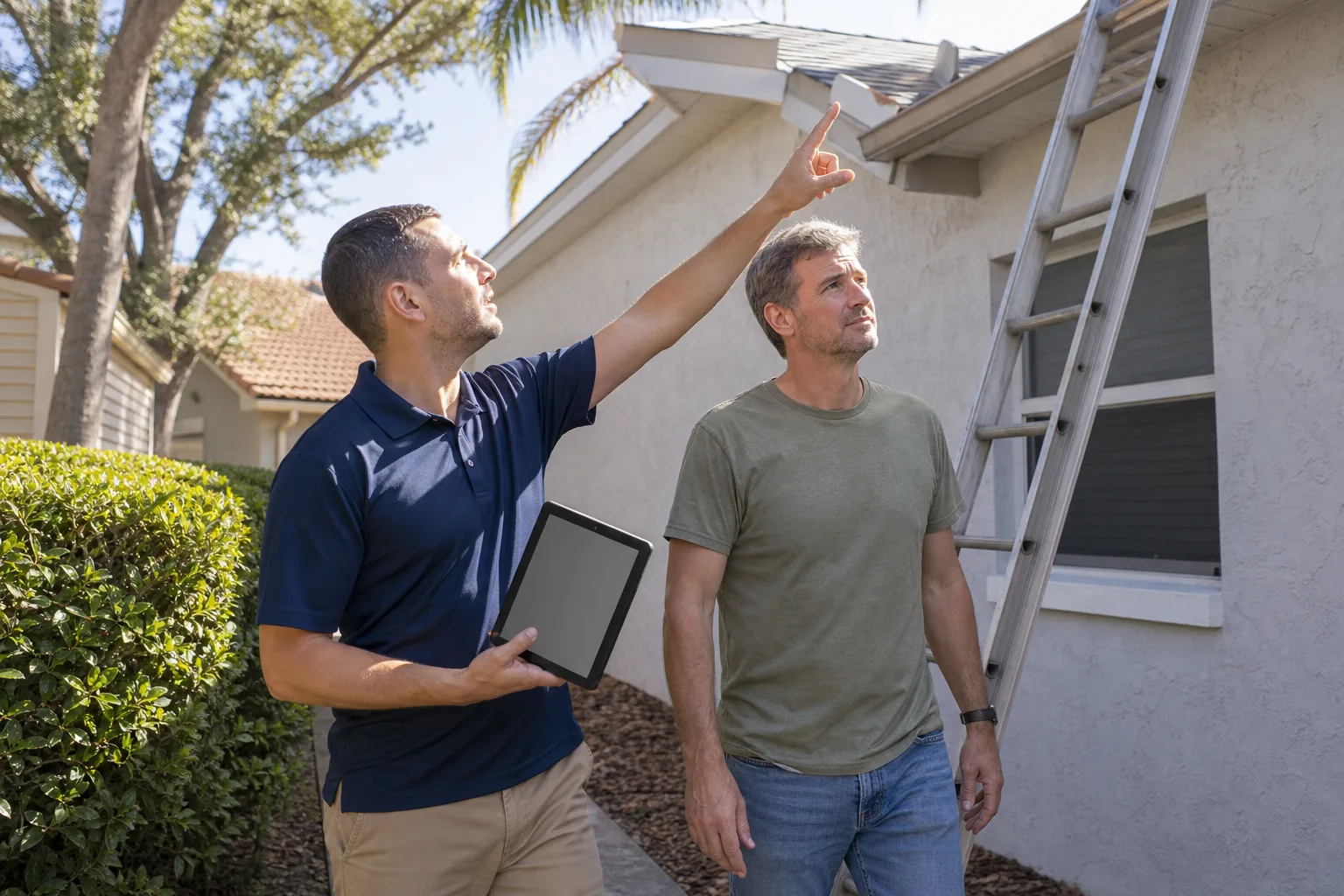
- Do not climb the roof. Call for a professional inspection and log the call.
Tornado or high wind
- Confirm everyone is safe, then photograph the exterior from a safe distance.
- Check for downed power lines before walking the yard – keep back and call the utility.
- Inspect the roof from the ground for missing shingles and lifted flashing.
- Look for structural cracks around windows and door frames. Interior cracks running from corners are a red flag for foundation stress.
- Photograph the fence line and any outbuildings.
- If the roof is exposed, arrange emergency tarping the same day when safe to do so.
Flash flooding
- Photograph water lines on the foundation, driveway, and fence before they dry.
- Document standing water in the yard, garage, and any low-lying areas.
- Check the attic and ceiling for signs of water wicking upward or through vents.
- Photograph the driveway surface and any pavers that have shifted or washed out.
- Do not run HVAC or major electrical until the system has been assessed.
Freeze
- Document burst pipe locations and shut off the main if not already done.
- Photograph water staining on ceilings and walls immediately.
- Check exterior for cracked masonry, patio pavers, and fence posts split by ice.
- Photograph any ice-damaged roof flashing or gutters.
In every case: photograph first, call your insurer second, and get a professional inspection scheduled the same day when possible. Keep a running log – date, time, what you found, who you called.
How do you tell storm-chasers from legitimate Richardson contractors?
Within 48 hours of a major hail event, out-of-state crews with out-of-state plates start working Richardson neighborhoods. Some do honest work. Many don’t. The ones to watch for share a recognizable pattern, and knowing it in advance is what protects you. In our experience, the difference shows up in three specific places: paperwork, presence, and guarantees.
- No local physical address or verifiable license. A legitimate Texas contractor has a physical address you can visit and a verifiable state registration. Storm-chasers work from a hotel room and a phone number that gets disconnected.
- Pressure to sign today. “This price is only good while we’re in the neighborhood” is the oldest pressure tactic in the trade. A real contractor is happy to have you sleep on the estimate.
- They want to handle your insurance claim for you. A contractor can document and advocate, but a legitimate professional never asks you to sign over your rights or your claim payment. You remain in control of the money.
- No warranty paperwork. Storm-chasers are here for a season. They can’t back a multi-year workmanship promise, because they won’t be here to honor it. Ask to see the warranty in writing.
- Cash-only demands or deposits over a fixed percentage. Texas has rules about deposits on residential construction; reputable contractors operate within them and put everything in writing.
- No background-checked crew. If a crew arrives unmarked, unverified, and unannounced, you have no way to know who is on your property.
The vetting work you do today eliminates tomorrow’s pressure. Identify two or three legitimate Richardson contractors now, look up their state registration, and save their contact info. When a storm hits, you don’t shop – you call people who already know your house.
What emergency tarping and temporary repairs can you authorize safely?
Temporary repairs protect your home and your claim simultaneously – if you do them right. Done wrong, they can look like permanent alterations that void part of the claim. The general rule: mitigate the damage, document everything, and keep the receipts.
Emergency tarping and temporary work are typically authorized under a standard homeowner policy’s “duty to mitigate” clause, meaning you’re expected to prevent further damage. What you can authorize:
- Roof tarping over any exposed or missing shingle area, secured with battens, done by a professional with fall protection.
- Board-up of damaged windows, doors, or openings.
- Removal of debris that’s blocking drainage or posing a safety hazard.
- Temporary fence repairs where a fallen panel leaves the yard open.
- Water extraction and drying after flooding to prevent mold.
What to always do alongside any temporary repair: photograph the damage before and after, keep the receipt for the tarping or labor, and log the time and date. Insurers want to see mitigation, not redone work. Never authorize the permanent repair before the adjuster has reviewed the damage. And never sign a “repair authorization” that also commits you to the full replacement – those are two separate decisions.
The safety caveat here is real: roof tarping is height work with fall risk, especially on a wet, damaged surface. Don’t attempt it yourself. Have a professional handle it, even if you’re paying a small emergency fee. The cost of a fall is far higher than the cost of a tarp.
Why does a pre-vetted contractor relationship beat any checklist?
Every guide you’ll read after a storm tells you to “get three estimates” and “check references.” By the time you’re reading it, the roof is exposed, the ceiling is leaking, and every reputable contractor in North Texas has a two-week backlog. That’s the gap a pre-vetted relationship closes. It’s worth more than any checklist because it operates before the emergency, not during it.
What a pre-established relationship gives you:
- Priority scheduling. When a contractor already knows your home, your roof, and your history, you’re not a stranger calling a busy line.
- Faster documentation. Your contractor can produce inspection photos, material records, and prior work orders in a form your insurer accepts.
- Honest scoping. Someone who has worked on your house won’t oversell a repair that isn’t needed – they know your baseline.
- The safety net of a guarantee. Our work is covered by the 730-Day Done Right Promise – if it’s not done right, we make it right – one of the longest workmanship guarantees in residential construction. That’s the kind of commitment only a real, accountable local contractor can put in writing.
- Real people, real responsiveness. Our calls are answered by a live person, 24 hours a day, seven days a week – no voicemail black holes, no waiting until Monday. When you’re standing in a wet hallway at 2 a.m., that’s the difference that matters.
The pre-vetted approach also levels the insurance conversation. You walk into the adjuster meeting with a contractor in your corner who has a documented history with your property, not a stranger who appeared after the storm. That changes the leverage – and the outcome.
Which parts of Richardson and which materials take the worst hits?
Richardson’s damage map is not uniform. Certain neighborhoods and certain materials absorb the worst of what North Texas delivers, and knowing which is which helps you prioritize your prep budget. The city’s development sits along the Prairie Creek and Duck Creek corridors, where flash flooding concentrates in low pockets during heavy rain events, and the mature-tree canopy in older neighborhoods amplifies wind and limb damage.
Neighborhood-specific exposure
- Older, mature-tree neighborhoods (Canyon Creek, Prairie Creek, the Heights) experience more limb-fall roof and fence damage during wind events – the trees that make the neighborhoods beautiful are also the delivery mechanism for impact damage.
- Low-lying areas near the creek corridors face flash-flood pooling in driveways, yards, and garages; pavers and drainage grading matter more here.
- Newer infill and townhome areas tend to have less tree cover but more shared-wall and flat-roof assemblies where a small flashing failure becomes an interior leak quickly.
Material-specific exposure
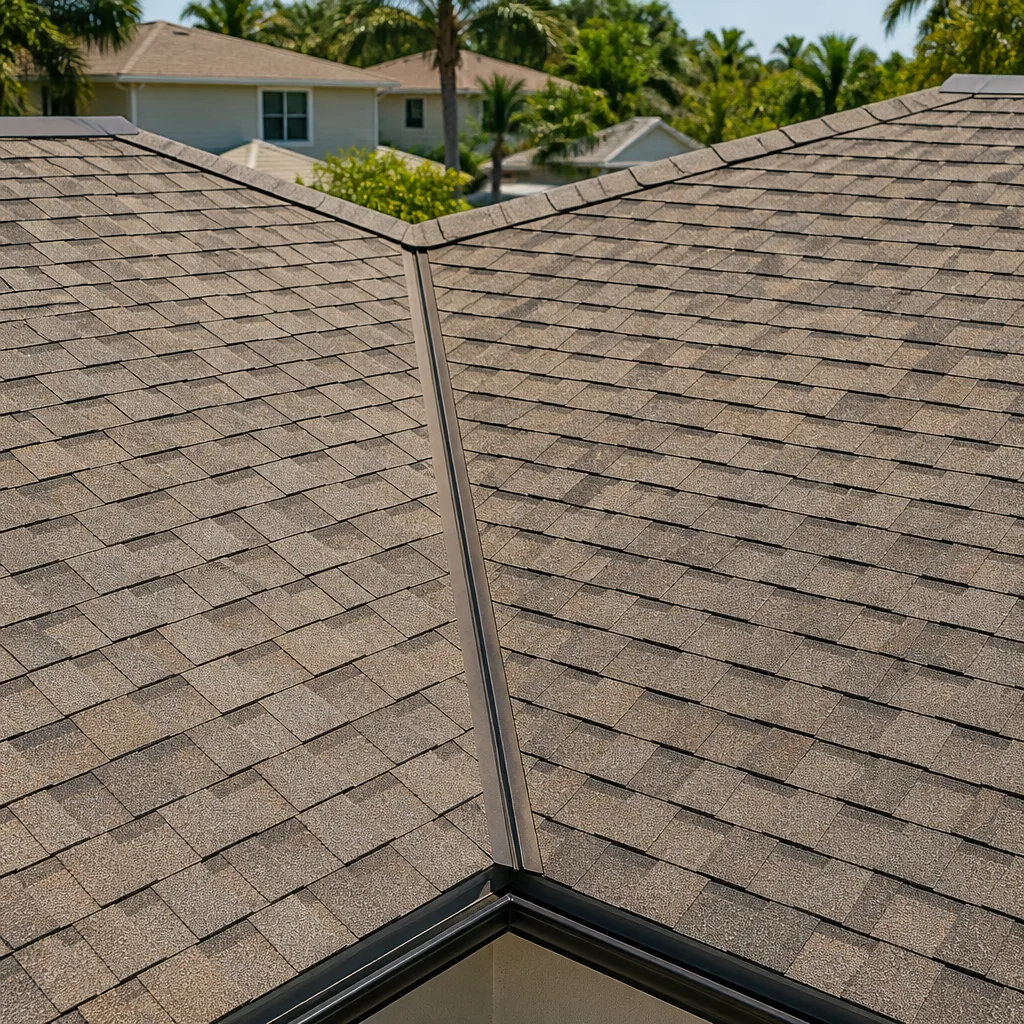
Asphalt shingle roofs (the most common residential roofing material in Richardson) take hail impact in the form of granule loss and bruising that isn’t visible from the ground – which is exactly why a professional inspection after every hail event is worth the trip. Fences with wood post-and-rail construction split and tilt in freeze cycles; vinyl panels crack in hard hail. Driveways and patio pavers shift when soil saturation follows a drought, which Richardson’s clay soils do more than most. Windows and doors with aging seals let in wind-driven rain during high-wind events.
If you’re planning improvement work on any of these systems, matching the material to Richardson’s climate is the smart move: brand partners like GAF and CertainTeed make impact-rated shingles, and PGT and CGI make impact-rated window assemblies engineered for hail-and-wind zones like ours. Choosing the right material before the storm is a form of preparedness too. If you want the full picture of how the material choices connect across your home, the Groundwork Construction Co. of Richardson home page lays out every category we work in.
How do you protect your insurance standing during repairs?
Getting the claim approved is one thing. Keeping it intact through the repair is another. The homeowners who end up fighting their insurer after the fact usually made one or more of these moves during the process: they authorized permanent repairs before the adjuster’s inspection, they lost receipts for mitigation work, or they accepted a verbal scope that didn’t match what was written down.
Protect your standing with a few disciplined habits:
- Get the adjuster’s written scope before approving permanent repairs. Emergency mitigation is separate from the permanent repair scope.
- Keep the paper trail complete. Every receipt, every photo, every email from your contractor documenting the damage.
- Require a written, line-item quote for every repair – no lump sums. Upfront pricing, no surprises is how we operate, and it’s how your insurer can match scope to payment.
- Don’t sign a “direction to pay” or anything that assigns your claim rights to a contractor. You stay in control of the money.
- Report changes promptly. If you discover additional damage during the repair, notify your adjuster before authorizing the additional work.
- Keep documentation of the pre-existing condition. This is where your “before” file pays off.
One more note on scope: it’s common for a post-storm inspection to reveal pre-existing wear that isn’t covered, and a good contractor will separate covered damage from homeowner responsibility in writing. That separation protects your standing with the insurer and gives you a clear decision on what to fix now versus later.
Common Mistakes to Avoid
- Climbing the roof yourself after a hail event. Wet, damaged shingles are a fall hazard, and you’ll miss the invisible bruising that actually matters. Let a professional inspect it – the visible dent is rarely the real damage.
- Signing a storm-chaser’s “today-only” contract. The pressure is the pitch. If a crew won’t let you sleep on it, that’s all the information you need about whether they’ll stand behind the work.
- Authorizing permanent repairs before the adjuster’s scope is in writing. Emergency tarping is fine; full replacement on an unapproved scope can cost you part of the claim.
- Skipping the “before” file because your home looks fine. The file that saves your claim is the one made on a clear weekend when nothing is wrong.
- Letting a contractor handle your claim for you. Documentation help is fine. Signing over your claim rights is not. You stay in control of the money and the decision.
- Ignoring small signs after a freeze. A hairline crack in the garage ceiling or a shifted paver in the driveway can point to bigger structural movement after an ice event – photograph it and get it checked.
- Hiring purely on price in the days after a storm. The lowest number you’ll see in the chaotic week after a major Richardson event is often the one that costs the most by the time it’s done.
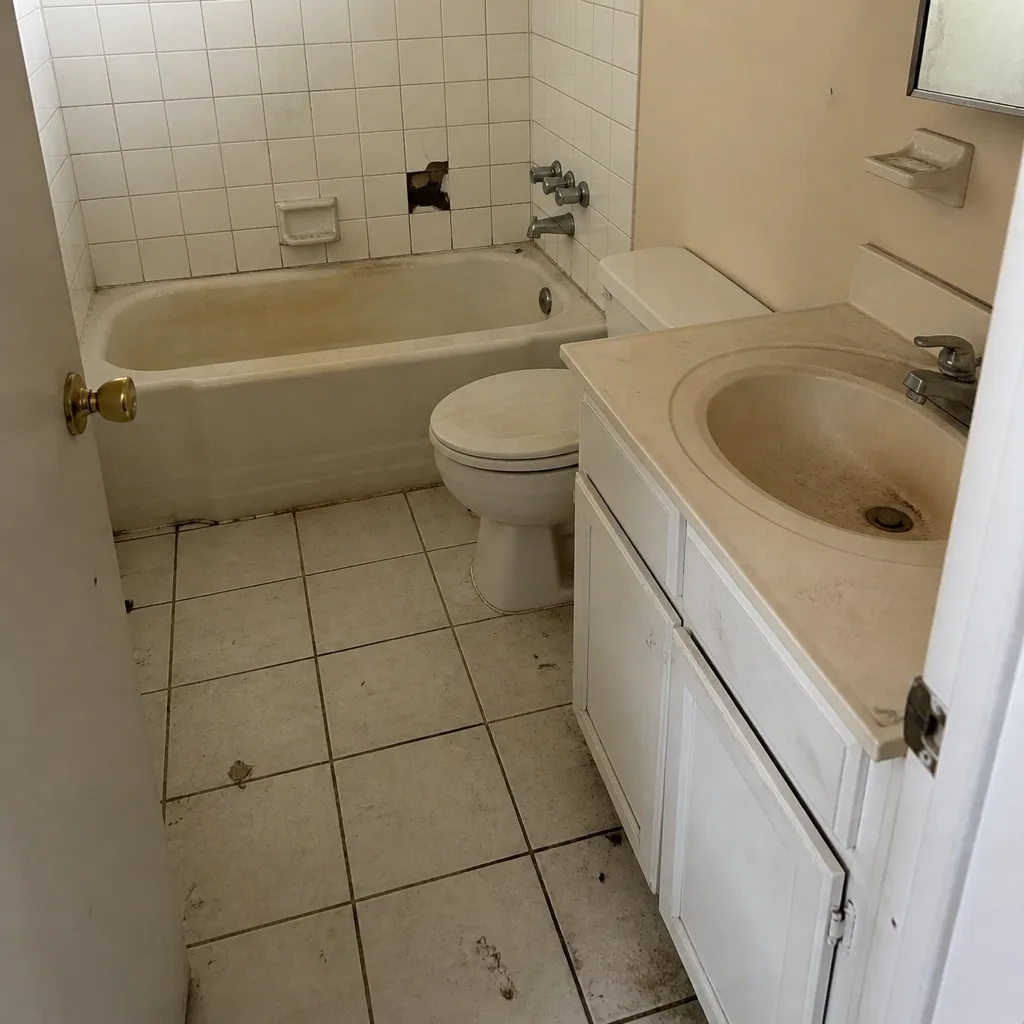
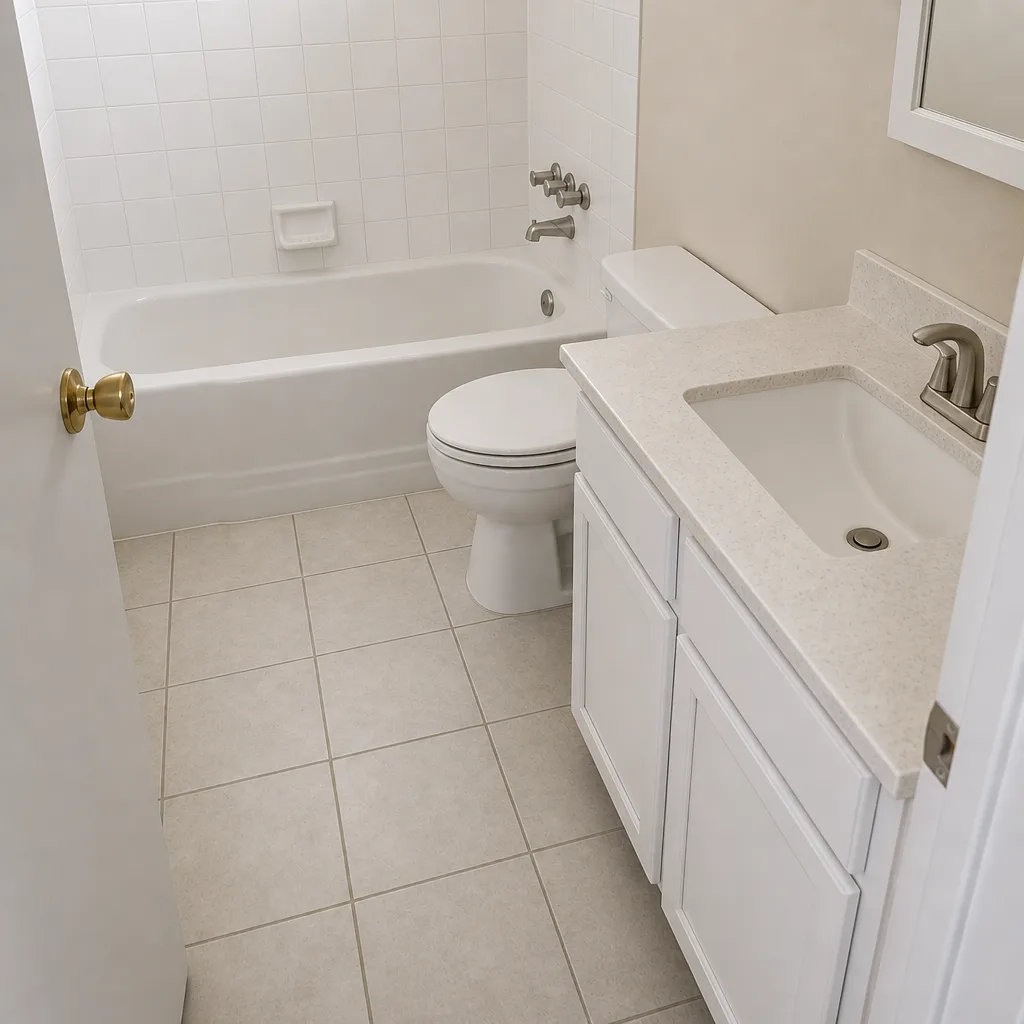
See the difference
 Before
 After
 Before
 After
 Before
 After
When to Call a Professional
Call a professional immediately when the roof is exposed, when water is actively entering the home, when you see structural cracking around window frames or doorways, or when a freeze has burst a pipe. Those are the cases where waiting even a day multiplies the damage. Call for a professional inspection after any hail event over quarter-size, after any tornado or high-wind event in your area, and any time you see interior staining you can’t explain. Don’t attempt roof work, tarping, or electrical work yourself – those are genuinely dangerous tasks that deserve trained hands with fall protection and proper gear.
Groundwork Construction Co. of Richardson offers free estimates in Richardson – call (833) 954-4985. We answer live, 24 hours a day, and we’ll get an inspection scheduled fast.
Frequently Asked Questions
Emergency roof tarping in Richardson typically runs $300 to $700 for a standard single-slope area, depending on roof pitch, access, and the size of the exposed section. Complex rooflines and steep pitches run higher. The cost is usually reimbursable under a homeowner policy’s duty-to-mitigate clause when documented with a receipt – which is one reason to have it done by a professional and keep the paperwork. Call (833) 954-4985 for a free estimate on tarping or a full post-storm inspection.
Coverage depends on the policy, not the timing, so hiring during the storm doesn’t automatically cost you the claim. What does hurt the claim is authorizing permanent repairs before the adjuster’s written scope, or losing receipts for mitigation work. Emergency mitigation (tarping, board-up, water extraction) is usually covered when documented. Call (833) 954-4985 to schedule a free inspection and get a written line-item scope you can hand to your adjuster.
A legitimate contractor has verifiable local credentials, physical presence, and a written multi-year workmanship guarantee. Storm-chasers work from a hotel, pressure you to sign today, want to handle your insurance claim for you, and disappear once the season ends. Ask for the state registration, ask for the warranty in writing, and ask for references from actual Richardson jobs – a real professional will produce all three without hesitation. Call (833) 954-4985 for a free estimate that won’t come with a today-only price.
Confirm everyone is safe, then stay off the roof and away from downed lines while you photograph damage from the ground. Once the area is clear, call your insurer to open a claim, and call a legitimate contractor to schedule an emergency inspection and tarping if the roof is exposed. Don’t sign anything the same day, no matter who knocks. Call (833) 954-4985 – we answer live 24/7 and can talk you through the first response.
Yes. We handle everything from emergency tarping and temporary repairs through full roof replacement, fence repair, window and door replacement, driveway and paver restoration, and structural reconstruction – the whole scope under one contractor. Our work is covered by the 730-Day Done Right Promise, and every technician on your property is background-checked and arrives in uniform. From foundation to finish line, one contractor, one accountability chain. Call (833) 954-4985 for a free estimate.
Insulate exposed pipes in the garage and attic, disconnect garden hoses, drain the exterior spigots, and photograph the exterior masonry, patio pavers, and fence line while everything is intact. Texas freeze damage often shows up not in burst pipes but in cracked masonry and lifted pavers from ice-cycle expansion. Have your HVAC and water heater serviced before the first hard freeze, and keep a documented “before” file of the exterior so any freeze cracking is provable. For a free exterior inspection before winter, call (833) 954-4985.
The Bottom Line
Richardson construction emergencies reward advance preparation and punish last-minute decisions. The homeowner who comes out of the next hail event whole is the one who photographed the roof on a clear weekend, knew which local contractor to call, and had the first-24-hours sequence already in their head. It’s not about being ready for a disaster – it’s about being ready so the disaster doesn’t cost you weeks and thousands of dollars in bad decisions. If you want to close the gap today, that’s exactly what Driveway & Pavers in Richardson, Fence Installation in Richardson, and Home Additions & ADU in Richardson are designed around: choose the right material, install it right the first time, and back it in writing. From foundation to finish line, that’s how we approach every Richardson home.
Want a free pre-storm inspection of your roof, fence, gutters, and exterior? Call Groundwork Construction Co. of Richardson at (833) 954-4985 and we’ll get you scheduled. Upfront pricing, no surprises, and a written scope before anything begins – so when the next storm hits, you already have your contractor on file.
Written by the team at Groundwork Construction Co. of Richardson.